Is a Metal Roof Worth It in Florida Right Now?
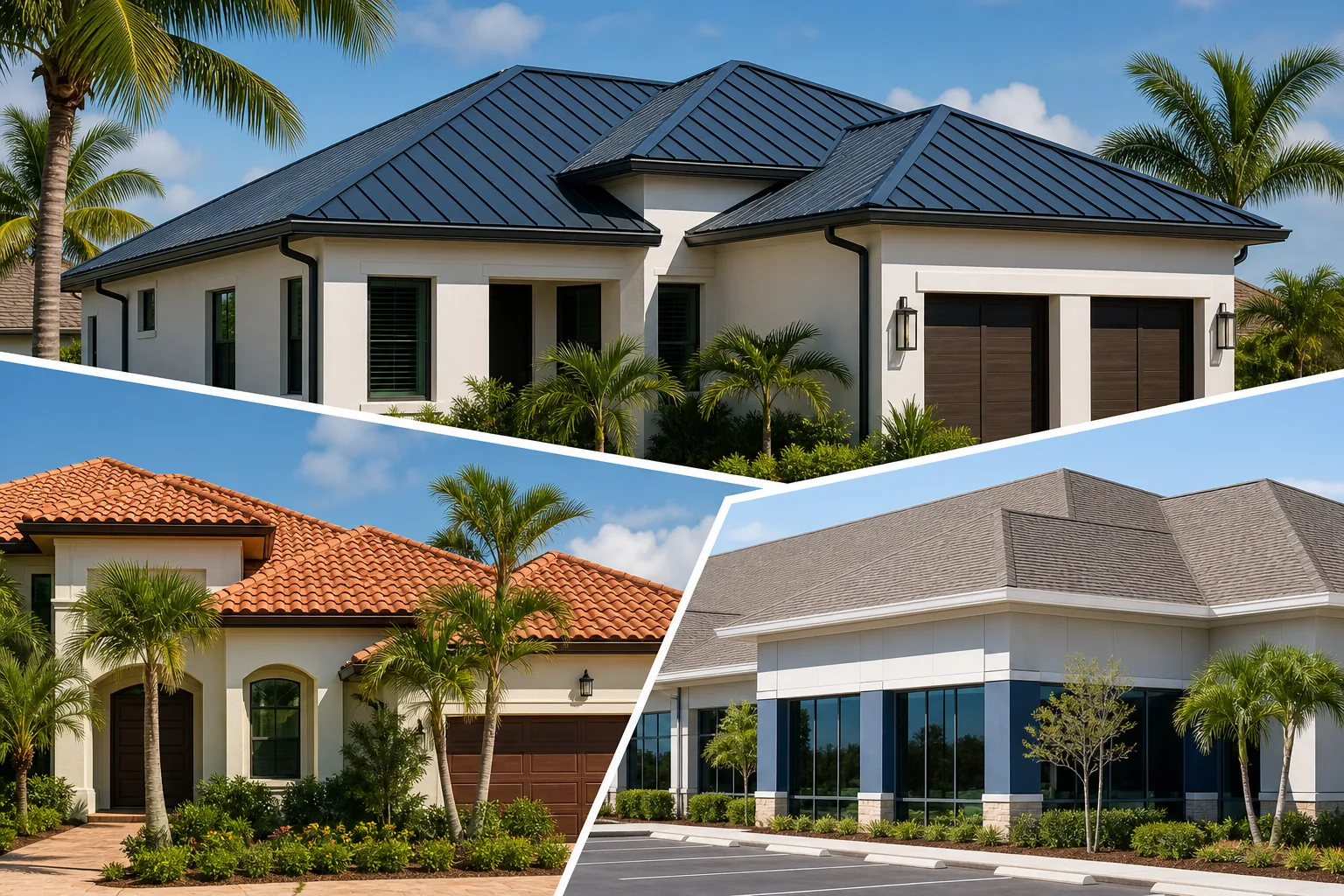
In this article
TL;DR: Metal roofs often cost more upfront than architectural shingles. Their service life and any insurance credit depend on the installed system, location, and insurer. Whether the investment makes sense depends on how long you plan to stay, your current insurance situation, and what your structure can support.
What You Need
Before running any numbers, gather these things so you can have a real conversation with your contractor, not a guessing game.
- Your current homeowner's insurance declarations page (so you know what you're paying now and what credits might apply)
- The age and material of your existing roof
- Basic square footage of your home's footprint, including any garage or covered lanai
- Any HOA documents that restrict roofing materials or colors
- A rough sense of how long you plan to own the home, five years, ten years, or indefinitely
You do not need to be an expert. That's what the estimate visit is for. But walking in with these basics means the conversation moves faster and the numbers get more accurate.
Step 1. Understand What "Metal Roof" Actually Means Here
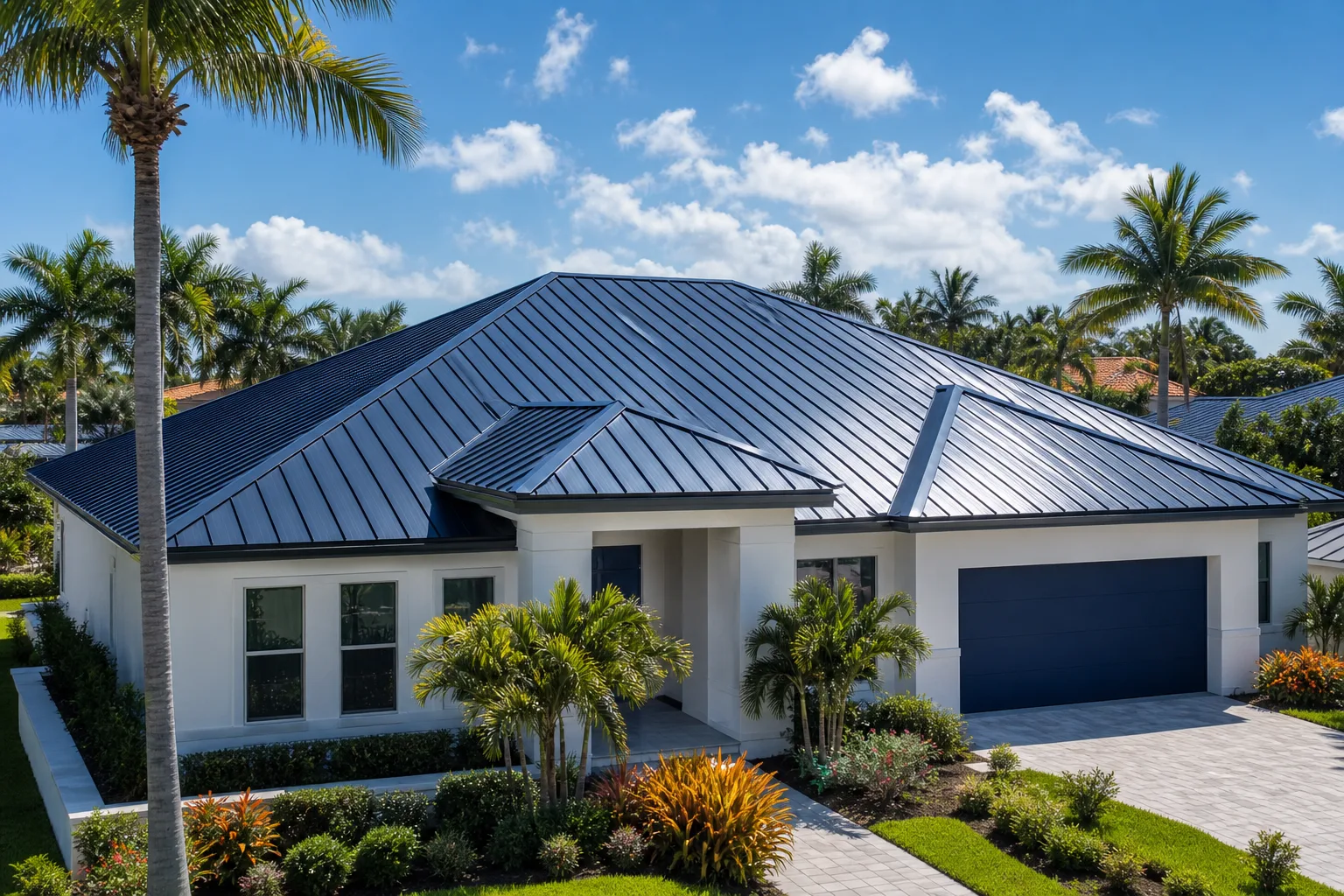
In South Florida, "metal roof" almost always means one of two things: standing-seam panels or exposed-fastener metal panels. Standing-seam is the premium option. The fasteners are hidden under interlocking seams, which means no exposed screws to back out, corrode, or leak over time. It's what you see on high-end homes and commercial buildings alike.
Exposed-fastener metal, sometimes called corrugated or R-panel, costs less but requires periodic fastener inspection and re-sealing, especially after hurricanes.
For most residential applications in Boynton Beach, Delray Beach, or Boca Raton, I'm going to be honest: if you're comparing metal to tile or shingles, you want standing-seam. The exposed-fastener option can make sense on a detached garage, a flat addition, or a budget commercial build, but it introduces maintenance that standing-seam avoids.
You can see examples of what metal installations actually look like in our project gallery to get a sense of finished product before committing.
Step 2. Run the Real Cost Comparison
I won't quote you specific prices here because material costs shift and every roof has variables. What I will tell you is the general shape of the comparison in our market.
Architectural shingles are the baseline. Metal roofing typically runs higher per square than shingles, and tile can go higher still depending on the tile weight and underlayment required. The gap between shingles and standing-seam metal is real and meaningful.
But here's what I always ask homeowners to do: divide the total installed cost by the expected years of service.
Material guides provide broad benchmarks, but an individual roof's useful life depends on installation, maintenance, and storm exposure. Use a condition assessment and realistic scenarios in your cost comparison. When you run that math, the cost-per-year difference narrows considerably, and sometimes flips in metal's favor.
Also factor in re-roofing disruption. Every time you replace a roof, you're paying for tear-off, disposal, permitting, and the inconvenience of a crew on your house for several days. If metal means you do it once instead of twice or three times over the same period, that has real value.
For a broader look at how material pricing has moved in our area recently, check out our post on roofing material price trends in South Florida.
Step 3. Check Your Insurance Situation Specifically
This is where I see the biggest disconnect between what homeowners assume and what's actually on the table.
Florida insurers can offer credits for certain impact-rated, wind-mitigated roofing systems. Documented roof features may qualify, but metal alone does not guarantee a credit; see Florida's official mitigation form. But the credit varies by insurer, by your specific county, by roof geometry, and by the attachment method used.
Before you assume you'll save X dollars per year, call your insurance agent with the specific product approval number of the metal system you're considering and ask them to run the numbers. Don't accept a vague yes. Get a dollar figure.
If you're in a Citizens Insurance policy, the rules have been shifting. For the latest context on how 2026 insurance changes affect your roofing decisions, our post on Florida roofing insurance changes for 2026 is worth reading before you have that call.
Want to know what your roof actually needs? Get a free estimate
Step 4. Check Your Structure and HOA
Metal roofing, especially standing-seam steel or aluminum, is lighter than clay tile. That's a genuine advantage on older homes whose trusses or rafters weren't engineered for heavy tile loads.
However, weight isn't the only structural consideration. Ventilation and condensation control should be evaluated as part of any reroof; the needed assembly details depend on the building. A good contractor will flag this during the estimate walk, and if yours doesn't ask about it, that's worth noting.
On the HOA front: many communities in Boca Raton, Delray Beach, and along A1A have deed restrictions on roofing materials or color palettes. Metal has historically been restricted in some traditional-style communities, though that's changing as more modern metal profiles look clean and residential. Pull your HOA docs before you fall in love with a particular system.
Step 5. Get Bids You Can Actually Compare
This is the part I care about most, because I see homeowners get confused by bids that are quoting completely different things.
When you get multiple bids for a metal roof, make sure each one specifies:
- The exact product name and Florida Product Approval number
- Panel profile and gauge (thickness matters, confirm the specified gauge is suitable for the approved system)
- Underlayment type and layer count (critical for our climate)
- Fastening pattern and attachment method
- What's included in tear-off and disposal
- Permit pulled by the contractor, not the homeowner
- Warranty terms, both manufacturer and workmanship
A bid that's thousands cheaper may simply be a thinner gauge, a cheaper underlayment, or no permit. None of those are good trades. Our post on what a roofing warranty really covers will help you read the warranty language before you sign anything.
You can also start the process by getting a free instant estimate to establish a ballpark before you sit down with contractors.
Step 6. Think Through the Storm Performance Angle
South Florida is hurricane country. That's not fear-mongering, it's just why we all carry wind insurance.
Standing-seam metal, when properly installed and permitted, performs well in high-wind events. The continuous attachment, absence of exposed fasteners, and lack of individual pieces that can lift mean it holds together differently than shingles or tile systems under uplift pressure.
That said, no roof is immune to severe storm damage. Debris impact, improper installation, and edge metal failure are still real failure points regardless of material. What metal offers is a system with fewer mechanical weak points than either shingles (individual tab lift) or tile (mortar failure at hips and ridges).
For a deeper look at storm season preparedness across roofing types, our hurricane season roof preparation guide walks through what matters before a storm arrives.
Common Mistakes
Deciding based on aesthetics alone. Metal roofing looks great and comes in many profiles and colors. But if you haven't checked your HOA docs, insurance numbers, and structural compatibility first, you're making a major financial decision on vibes.
Choosing the cheapest metal bid without checking gauge and underlayment. A 29-gauge panel with a single-layer underlayment is not the same roof as a 24-gauge standing-seam with two-layer peel-and-stick. They should not cost the same, and if they do, something is wrong.
Do not assume an insurance credit. Eligibility and premium changes depend on the carrier, policy, inspection, exact approved product and completed work. Ask the insurer in writing before including a credit in the budget.
Not thinking about resale. A metal roof may affect buyer interest and resale value, particularly as buyers become more insurance-aware. But a brand-new metal roof won't necessarily add dollar-for-dollar to your sale price. If you're selling in two years, the math may not work.
Skipping the permit. Any full roof replacement in Palm Beach County requires a permit. If a contractor suggests doing it without one, that's a red flag that protects nobody except them.
Bottom Line
Metal roofing is worth it in Florida for homeowners who plan to stay long-term, want a specified, code-approved storm-resistant system, and are willing to invest upfront for reduced lifecycle cost. It is not automatically the right answer for everyone, and the difference between a properly specified metal roof and a cut-corner one is significant.
The honest move is to get an inspection and estimate that actually looks at your specific roof, structure, and situation rather than a number pulled from a general range.
Our residential roofing services page covers the full range of what we install, and you can request a quote to get the process started. We've been doing this in South Florida since 2005, and we'll tell you straight whether metal makes sense for your house or whether a different system serves you better.
Want to know what your roof actually needs?
Millennium Makeover has been roofing South Florida homes and businesses since 2005. Get a straight, no-pressure estimate from a licensed local crew (CCC1326328).
Frequently asked questions
How long does a metal roof last in South Florida's climate?
A well-installed metal roof can last for decades, but there is no guaranteed South Florida lifespan for a particular roof. UV exposure, salt air near the coast, and hurricane seasons are all real factors, but metal handles them better than shingles and comparably to tile when the right materials and underlayment are used.
Will a metal roof lower my homeowner's insurance in Florida?
A contractor cannot promise an insurance result. Ask the insurer whether the exact Florida Product Approval, assembly, inspection and documentation qualify under the policy.
Is metal roofing loud when it rains in Florida?
With proper underlayment and attic insulation, most homeowners find a metal roof no louder than other materials during rain. The loud-in-rain reputation comes from older or minimally-installed metal systems, typically on barns or sheds without insulation beneath. Rain noise depends on the assembly, insulation, and interior conditions.
Can my existing roof structure support a metal roof?
Metal roofing, particularly aluminum or steel standing-seam, is lighter than clay or concrete tile, so it's rarely a structural problem on homes transitioning from shingles. However, your contractor should assess attic ventilation during the estimate, since metal roofs require adequate airflow to prevent condensation issues in humid climates like South Florida.
Does my HOA allow a metal roof in my neighborhood?
Many HOAs in communities across Boca Raton, Delray Beach, and West Palm Beach have restrictions on roofing materials and colors. Metal has historically been restricted in some traditional-style communities, though modern standing-seam profiles are increasingly accepted. Always pull your deed restrictions and submit for HOA approval before signing a roofing contract.
What's the difference between standing-seam and exposed-fastener metal roofing?
Standing-seam panels interlock along raised seams with hidden fasteners, which eliminates exposed screws that can back out or corrode over time. Exposed-fastener metal uses visible screws through the panel face and generally costs less, but requires periodic inspection and re-sealing. Compare system approval, maintenance needs, and installed cost for your home.