What a Failing Roof Looks Like From Inside the Attic
In this article
TL;DR: A failing roof almost always leaves visible evidence in the attic before it leaks into living space. Look for water stains on the decking, daylight gaps at the eaves or ridge, sagging sheathing, mold growth, and compromised insulation. Finding these early is how you avoid a full emergency replacement.
What You Need
- A flashlight or headlamp (bright, not a phone light)
- A respirator or at minimum an N95 mask
- Safety glasses
- Knee pads or a plywood board to distribute your weight across rafters
- A camera or phone to document what you find
- At least 30 minutes of daylight outside (some signs are easier to spot in direct sun)
Do not walk on insulation batts. Step only on rafters or bring a piece of plywood to kneel on. One misstep and you are coming through the ceiling.
Step 1: Let Your Eyes Adjust, Then Check for Daylight
Once you are in the attic, turn off your flashlight for 60 seconds. If your eyes adjust and you can see pinpoints or streaks of light coming through the roof deck or along the eaves, that is a problem. Those gaps are where wind-driven rain enters.
Common spots to check:
- Along the ridge line
- Where the roof deck meets the fascia at the eaves
- Around any penetration (plumbing vents, exhaust fans, old antenna mounts)
- At hips and valleys where two roof planes meet
In South Florida, even a small gap at a hip or valley can let in gallons of water during a heavy afternoon storm. See also why roof valleys are especially vulnerable.
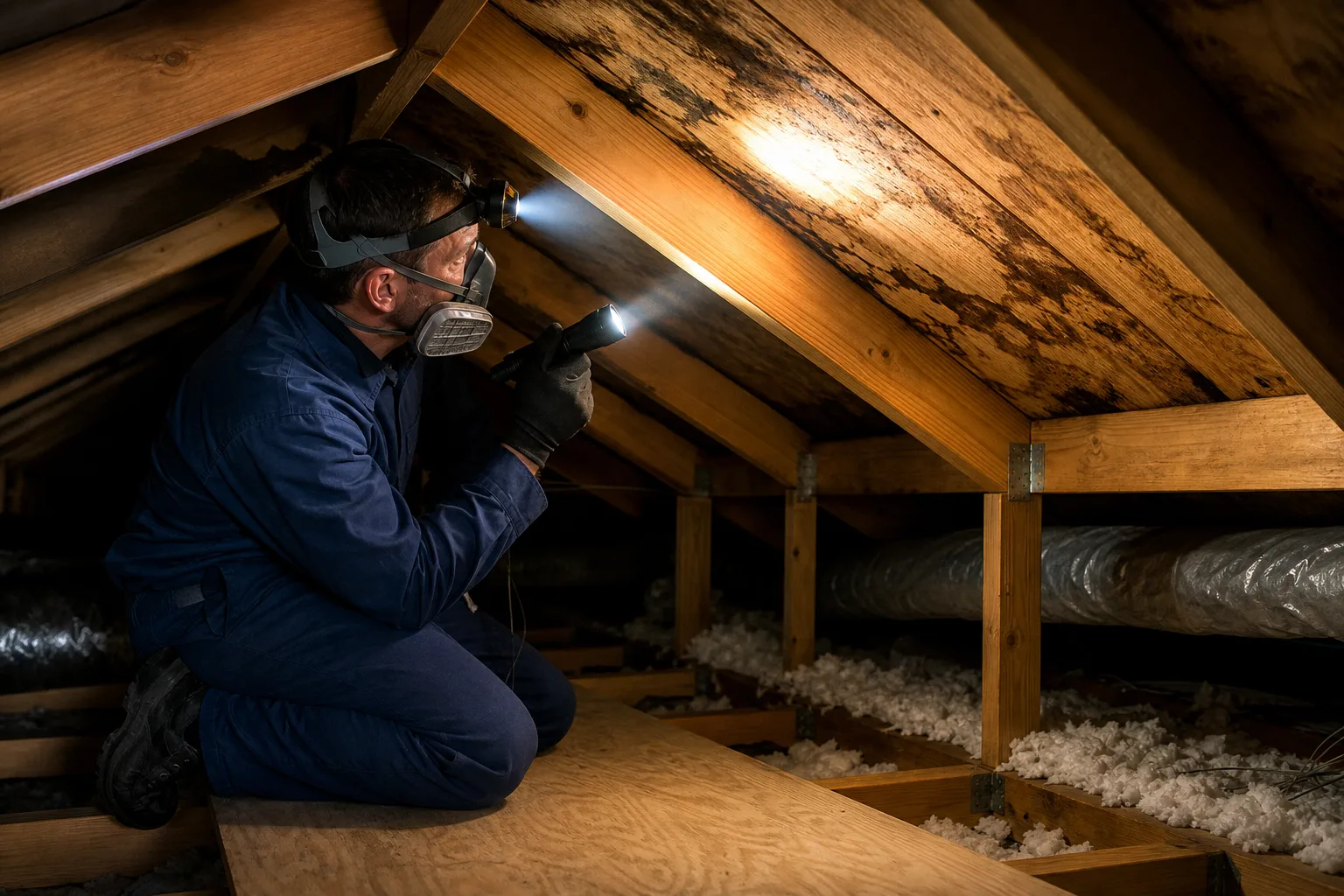
Step 2: Scan the Roof Decking for Staining and Rot
Now use your flashlight and work systematically from one end of the attic to the other. Shine the light at an oblique angle across the underside of the roof sheathing. You are looking for:
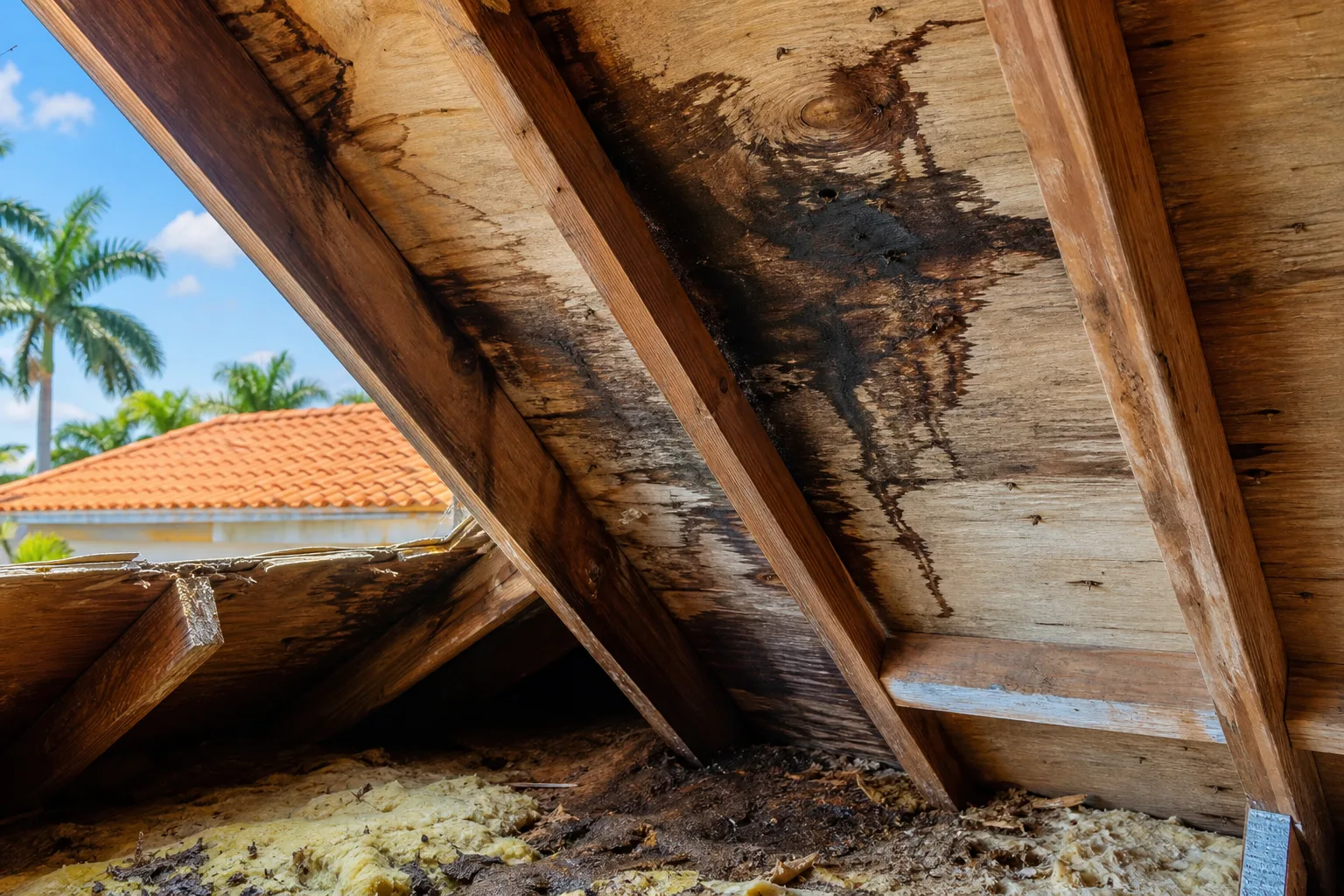
Water stains. Dark streaks or tide marks on the plywood or OSB. These are dried water trails from past leaks. Even if there is no active moisture right now, staining tells you water has been getting in. The question is whether it is still happening.
Soft or spongy decking. Press on the sheathing gently with your hand. Solid decking feels firm. Decking with rot behind it will flex or feel soft. This is a structural concern, not just a cosmetic one.
Black streaking that fans outward. This usually means a fastener or nail is rusting and weeping. In older homes with cut nails, this is common. It is worth noting but is lower priority than active rot.
Delaminating plywood. Plywood that has been repeatedly wetted and dried starts to separate in layers. You can see the edges bubbling or peeling apart. Once that starts, the sheet is no longer providing solid nail-holding for the roofing above it.
If you find soft decking in multiple spots, the repair conversation shifts. You are not just replacing a few shingles. You may be looking at partial or full deck replacement as part of a re-roof. That is something we document when we pull permits here in Palm Beach County. Related reading: what the tear-off phase of a roof replacement reveals.
Step 3: Check Rafters and Trusses for Moisture Damage
The structural members, rafters in older homes and trusses in most post-1990 construction, should be dry and show no signs of staining or fungal growth. Run your flashlight along each member.
Warning signs on rafters and trusses:
- Dark staining at the top chord where it meets the decking
- White fuzzy growth (efflorescence or early mold)
- Obvious black or green mold colonies
- Any member that looks bowed, cracked, or split
A cracked or compromised truss is a structural issue. Do not try to diagnose or repair that yourself. It requires an engineer, not just a roofer.
Spotted a leak or missing tiles? Schedule a repair visit
Step 4: Look at the Insulation
Insulation should be uniform and dry. What you might find instead:
Matted-down insulation. Batt insulation that has been wetted and dried compresses. If you see insulation that looks flat and clumped in spots compared to surrounding areas, water has been sitting on it. That spot almost always corresponds to an entry point above.
Discolored or stained insulation. Same story. The staining pattern usually points back toward the source better than ceiling stains do, because water travels before it drops.
Missing insulation near eaves. This one often has nothing to do with leaks. Pests, HVAC installers, or previous owners may have disturbed it. But missing insulation at the eaves combined with stained decking means you check soffit condition next. See how soffit damage connects to pests and the roof system.
Step 5: Inspect Flashing and Penetration Points From Below
Every pipe, vent, and exhaust fan that comes through your roof is a potential entry point. From the attic, look at the base of each penetration:
- Is the wood around it stained?
- Is there any daylight visible around the boot or collar?
- Does the flashing look bent, separated, or corroded?
This is where a lot of South Florida leaks originate. The field of the roof holds up, but a plumbing vent boot that has cracked or a corroded pipe collar lets water in every time it rains. The fix is usually straightforward, but only if you catch it before the surrounding decking rots out.
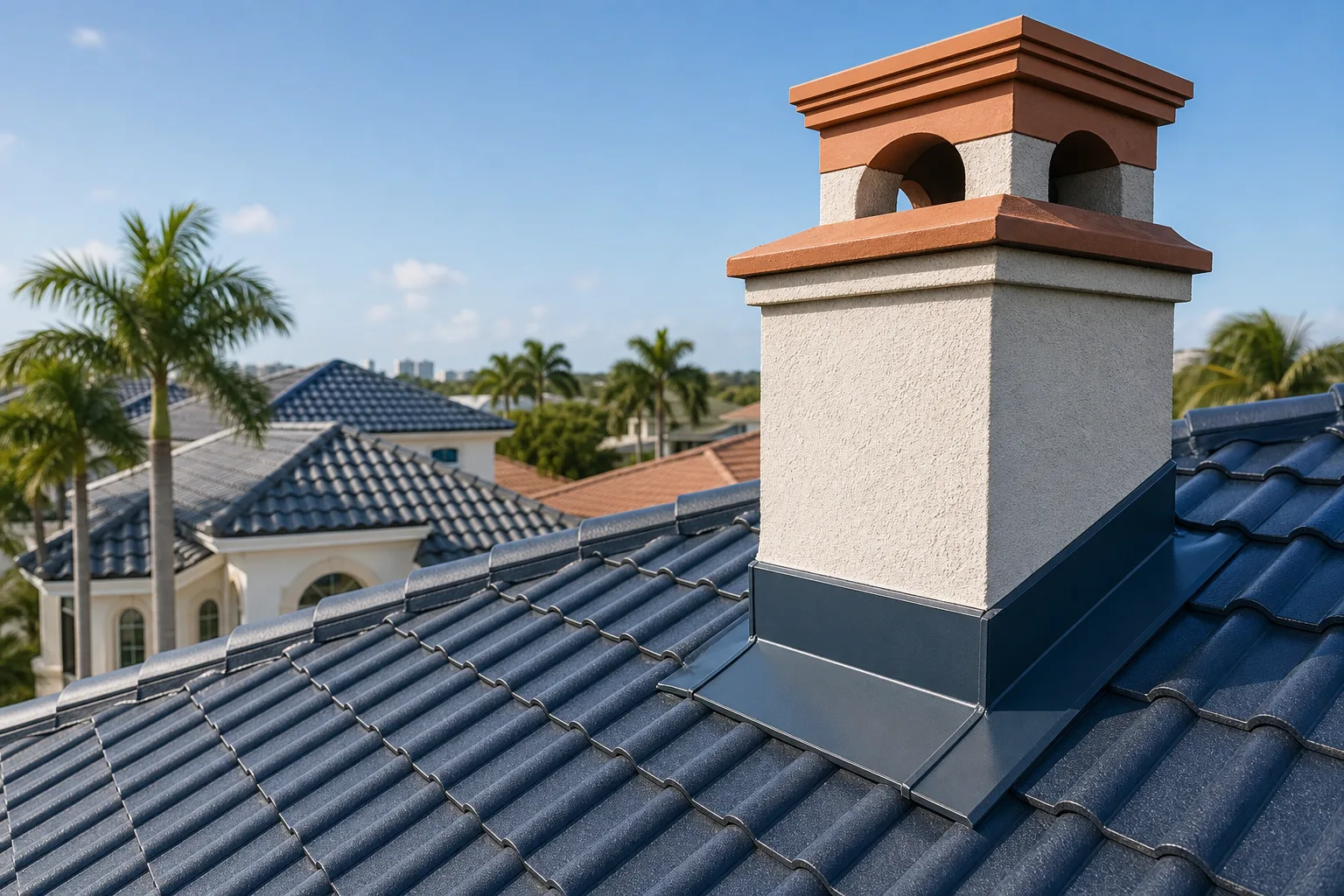
For homes with chimneys or skylights, those penetrations deserve extra attention. How contractors waterproof around chimney penetrations explains what proper flashing looks like.
Common Mistakes
Using only the ceiling as your guide. By the time a water stain appears on drywall, the leak has usually been active for weeks or months. The attic gives you earlier warning.
Ignoring stains because there is no active drip. Old stains tell you the roof has leaked before. If no repair was ever made, it will leak again. The absence of current moisture just means it has not rained hard enough recently.
Walking on the insulation and compressing it. This reduces its R-value and can hide evidence you need to see. Step on the framing members only.
Assuming daylight gaps at soffits are normal ventilation. Proper soffit ventilation uses vent screens, not open gaps. Open gaps mean pests and wind-driven rain have a path in.
Getting a storm-chaser quote right after a big storm. If you have found evidence of damage after a hurricane, get an estimate from a licensed local contractor with a verifiable Florida license, not someone who showed up in your neighborhood uninvited. We are licensed under CCC1326328 and have been in South Florida since 2005. Check any contractor you consider at the Florida DBPR license lookup.
Bottom Line
The attic is the best early-warning system your roof has. A 30-minute inspection with a good flashlight and a phone camera can tell you whether you are dealing with a minor repair, a section that needs attention before rainy season, or a roof that is approaching end of life.
If you find soft decking, active mold, or daylight gaps, those are not watch-and-wait situations in South Florida's climate. Heat and humidity accelerate every one of those problems fast.
If you want a professional set of eyes on what you found, request a quote or get a free instant estimate. We serve Boynton Beach, Delray Beach, Boca Raton, West Palm Beach, and Lake Worth.
Spotted a leak or missing tiles?
Small problems get expensive fast in the Florida sun. Get it looked at by a local crew before the next storm.
Frequently asked questions
How often should a South Florida homeowner check their attic for roof problems?
Once a year is a reasonable baseline, but you should also do a quick check after any significant storm. South Florida's rainy season runs roughly June through October, so a pre-season check in May gives you time to address anything before the heavy weather arrives.
Can I tell from the attic whether my roof needs full replacement or just a repair?
You can gather useful evidence, but the final call requires someone on top of the roof as well. Widespread soft decking, multiple active stain locations, or structural member damage are signs that lean toward replacement. A single compromised penetration or isolated soft spot may point to a targeted repair.
What does active mold in the attic mean for my roof?
Mold requires sustained moisture to grow, so its presence means water has been getting in consistently, not just once. It also means ventilation is likely inadequate. Both the moisture source and the ventilation need to be addressed, not just the mold itself.
Is attic mold covered by homeowners insurance in Florida?
Generally, insurance covers sudden and accidental water damage but not mold that developed from a long-term maintenance issue. The specifics depend on your policy. If the mold ties to a covered storm event, document everything with photos and contact your insurer before any cleanup begins.