Why South Florida Roofs Need More Ventilation Than You Think
In this article
TL;DR: South Florida's heat and humidity create conditions that punish under-ventilated roofs faster than almost anywhere else in the country. Poor airflow traps heat and moisture in the attic, which degrades shingles from the underside, rots decking, and drives up your cooling bills. Getting ventilation right is not glamorous work, but it extends roof life and protects everything underneath it.
What Happened
Ventilation requirements have existed in Florida building codes for decades, but the conversation mostly stays technical, buried in contractor manuals and code books. Homeowners rarely hear about it until they're sitting across from an estimator trying to explain why their ten-year-old shingles look fifteen years old.
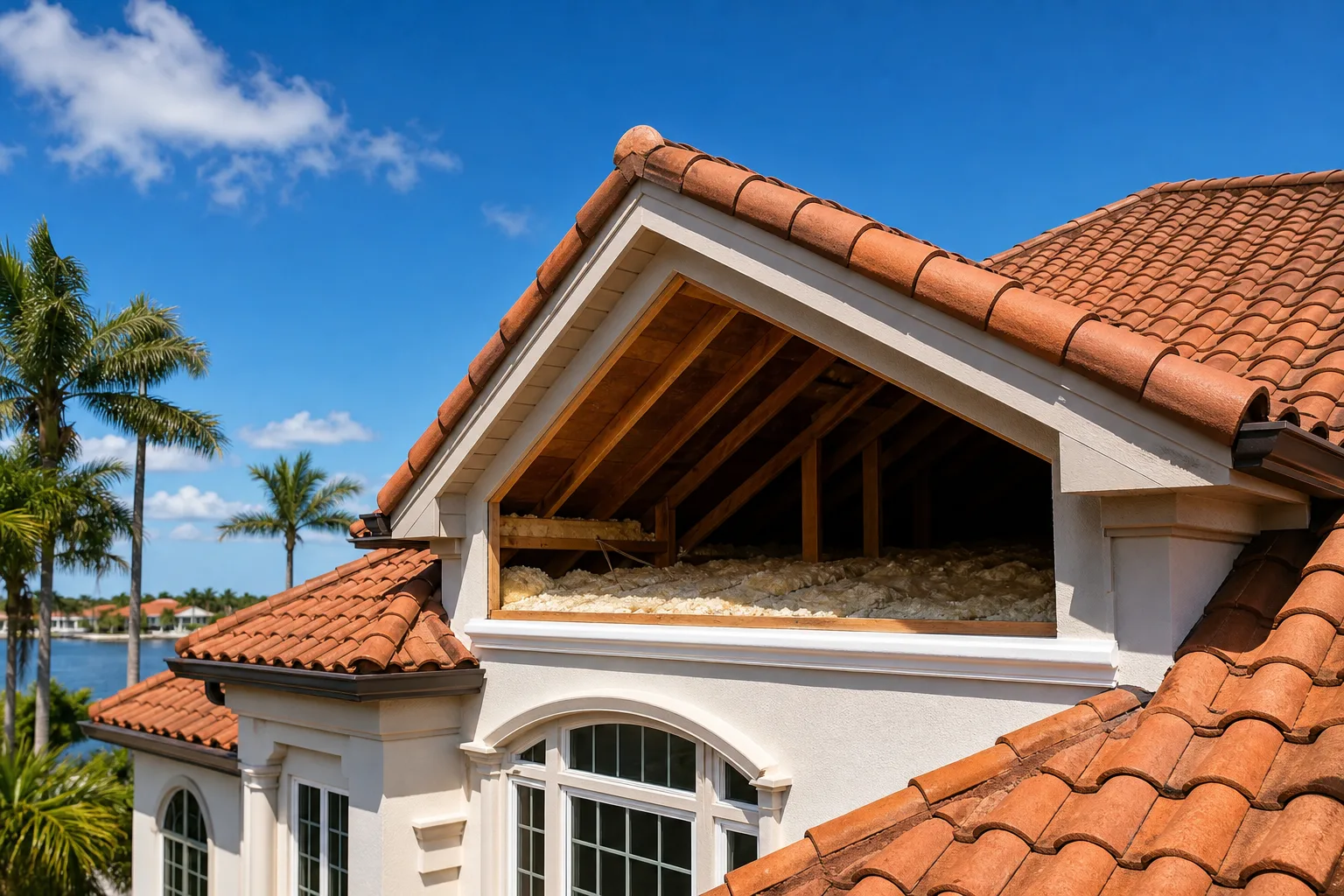
Here's what's actually going on. A residential attic in South Florida can reach temperatures of 150 degrees or higher on a summer afternoon. That's not a typo. The combination of direct sun on a dark or medium-colored roof surface, high ambient temperatures, and humidity that rarely drops below 70 percent creates an oven effect inside the attic space.
When that heat has nowhere to go, it bakes the underside of your roofing material. For asphalt shingles, that means accelerated granule loss, brittleness, and curling. For tile systems, the real damage is to the underlayment beneath the tile. The tile itself may look fine while the waterproofing layer underneath quietly deteriorates. For metal roofs, trapped heat causes expansion and contraction cycles that stress fasteners and seams over time.
Moisture is the other half of the problem. Florida air carries a lot of water vapor. When warm, humid air enters an attic and meets a cooler surface, it condenses. That moisture settles into wood decking, insulation, and framing. You don't need a roof leak to get rot. You just need poor ventilation doing its quiet damage year after year.
Why It Matters
Roof ventilation is not one thing. It's a system, and the system only works when intake and exhaust are balanced.
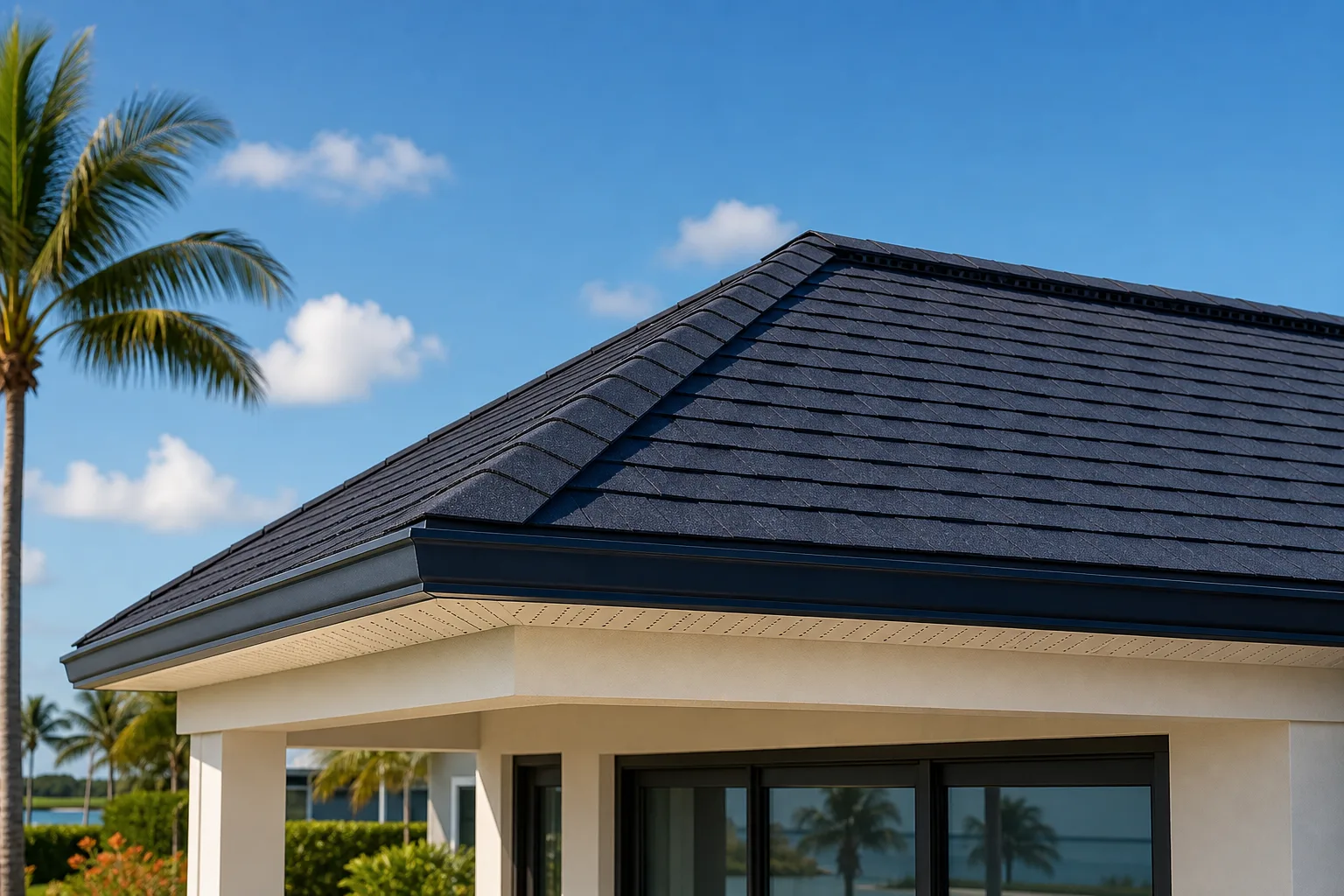
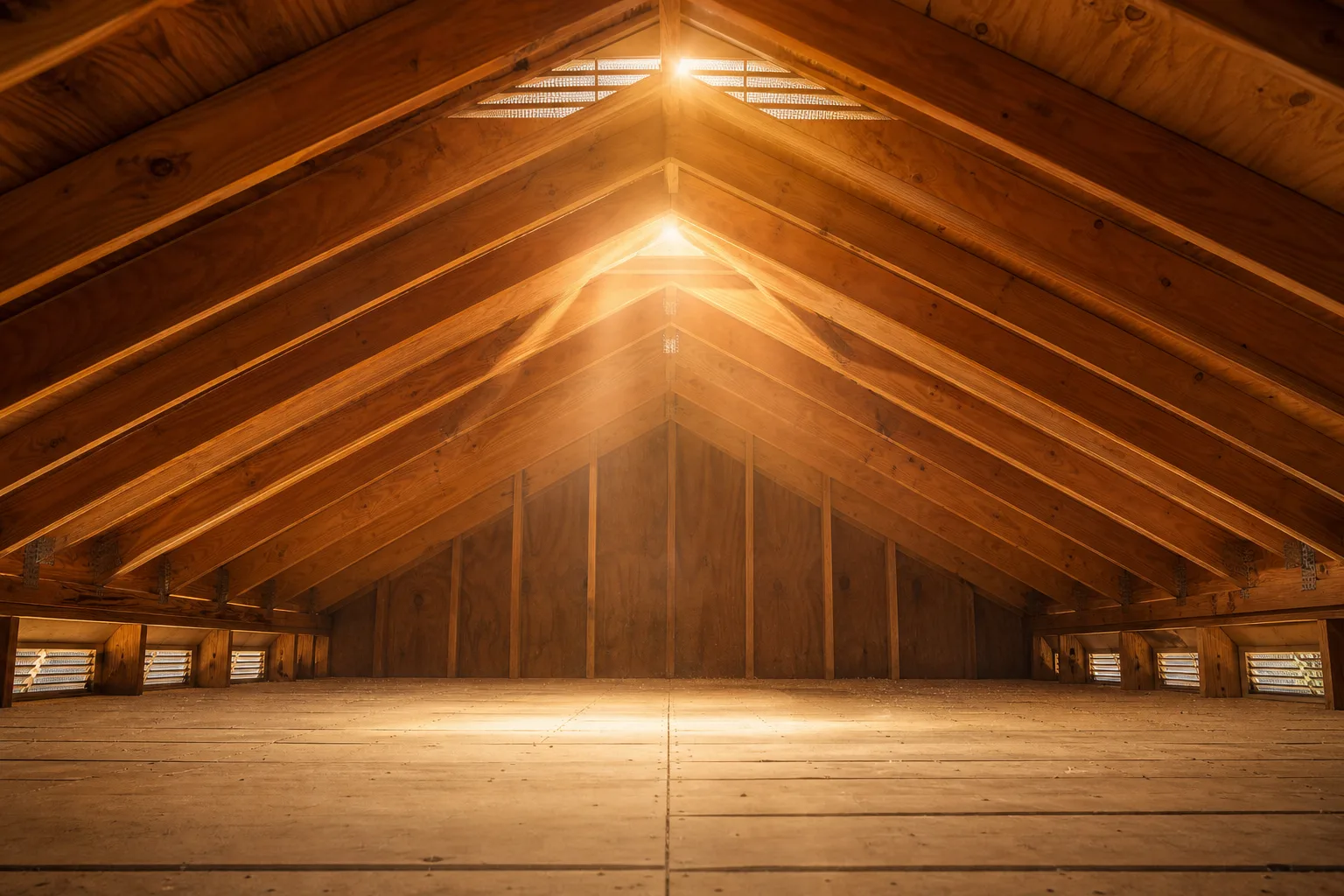
Intake ventilation typically comes from soffit vents, which are the perforated or louvered strips running along the underside of your roof overhang. They let cooler outside air enter the attic low. Exhaust ventilation comes from ridge vents, box vents, or power fans installed near or at the peak of the roof. The idea is that hot air rises, travels up through the attic, and exits at the top while fresh air continuously replaces it from below.
The problem in South Florida homes is often one of three things.
Blocked soffits. This is more common than most people expect. During re-roofing or insulation projects, soffit vents get accidentally covered with blown-in insulation or improperly installed baffles. Intake drops to near zero, and the entire system stalls. No matter how many ridge vents you have, if air can't get in at the bottom, it can't flow out at the top.
Insufficient net free area. Building codes specify a ratio of ventilation to attic floor space, typically one square foot of net free area per 150 square feet of attic space, though that can shift depending on vapor barriers and configuration. A lot of older homes in Boynton Beach, Delray Beach, and Lake Worth were built before current standards or had ventilation that was marginal at best. Additions and re-roofing projects don't always address what was already inadequate.
Mixing exhaust types. This is a technical one that matters a lot. If a home has both a ridge vent and lower exhaust vents like box vents or power fans, the lower vents can actually short-circuit the system. Instead of pulling air up from the soffits, they pull it in from the ridge vent and exhaust it before it ever circulates through the attic. The result is a dead zone of stagnant hot air sitting in the upper portion of the attic doing exactly what you don't want it to do.
When I'm doing an estimate and I notice an inconsistent mix of exhaust vents, that's something I flag right away. It's not always the reason for current damage, but it's a setup for future problems.
Ventilation also has a direct relationship with your energy bills. An attic that holds less heat puts less load on your air conditioning system. In South Florida, where air conditioning runs most of the year, that difference adds up. The U.S. Department of Energy has published guidance on how attic heat gain affects cooling loads, and the numbers are meaningful in hot climates.
If you're weighing whether ventilation improvements are worth it alongside other work, our post on roof repair vs. replacement covers how to think through that kind of decision.
Want to know what your roof actually needs? Get a free estimate
What We Don't Know Yet
A few things complicate the ventilation conversation in ways that honest contractors should acknowledge.
First, ventilation standards are not the same across all roof types. Low-slope and flat roofs, which are common on commercial buildings and some residential construction in South Florida, have different ventilation dynamics. Unvented hot-roof assemblies, where insulation is applied directly to the underside of the decking with no attic space, are code-compliant and can perform well when done right. If you have a flat or low-slope section on your home, ventilation advice that applies to a pitched attic may not apply to you. If you're dealing with a flat roof specifically, the why flat roofs fail early post explains the failure modes that are unique to that system.
Second, the relationship between ventilation and roofing warranties is real but often misunderstood. Many shingle manufacturers do require minimum ventilation levels to keep a warranty valid. The specifics vary by manufacturer and product line. If you're replacing a shingle roof and care about warranty coverage, ask your contractor to confirm that the ventilation plan meets the manufacturer's specs. This is something we verify as part of our process when doing residential roofing projects.
Third, power ventilators (attic fans) are a topic with legitimate disagreement among roofing professionals. Done right, a properly sized power vent with adequate intake can move a lot of air. Done wrong, or installed without enough intake, it can depressurize the attic and pull conditioned air up from the living space through ceiling penetrations, which is the opposite of what you want. There's no universal answer here. It depends on the house.
What to Do About It
If you haven't had a roof inspection recently, ventilation should be part of what gets checked. A real inspection isn't just someone walking the surface and looking for missing shingles. It includes getting eyes on the attic from below, checking whether soffit vents are clear, confirming that baffles are in place if blown insulation was installed, and verifying that the exhaust configuration makes sense. Our post on what happens during a professional roof inspection goes deeper on exactly what that process should cover.
For homes in Boynton Beach, Delray Beach, West Palm Beach, and Boca Raton that are approaching ten or more years since the last roof work, it's worth having someone specifically look at the attic. Many homeowners are surprised to learn that problems showing up on the outside started with conditions inside.
If you're getting estimates for a new roof or repair work, ask each contractor directly about their ventilation plan. If they can't describe it in plain language, or if they just say they'll install a ridge vent and leave it at that without evaluating the intake side, that's a gap worth probing. Our guide on how to compare roofing estimates in South Florida explains what to look for when comparing bids across contractors.
For storm-related damage where ventilation components may have been knocked out or compromised, our Hurricane Storm Center has specific guidance on what to check after a major weather event.
If you want an estimator to take a look at your current setup and give you a straight read on what's working and what isn't, you can request a quote or use the instant estimate tool to start the process. We've been doing this in South Florida since 2005, and ventilation is always part of how we look at a roof, not an afterthought.
A well-ventilated roof isn't something you notice. It just works, quietly, for a long time.
Want to know what your roof actually needs?
Millennium Makeover has been roofing South Florida homes and businesses since 2005. Get a straight, no-pressure estimate from a licensed local crew (CCC1326328).
Frequently asked questions
How do I know if my South Florida attic has enough ventilation?
Start by checking whether your soffit vents are visible and unobstructed from inside the attic. If blown-in insulation is covering them, airflow is compromised. A roofing contractor can calculate whether your net free area meets code requirements based on your attic's square footage.
Can poor roof ventilation actually shorten the life of my shingles?
Yes, and it's one of the more common reasons South Florida shingles age faster than expected. Heat trapped under the decking bakes shingles from the underside, causing granule loss, brittleness, and curling well ahead of the material's rated lifespan. Some shingle warranties also require minimum ventilation levels to remain valid.
Does adding a ridge vent automatically fix ventilation problems?
Not always. A ridge vent only works if there's adequate intake at the soffits to push air through the attic. If intake is blocked or insufficient, adding exhaust at the ridge doesn't create meaningful airflow. The intake and exhaust sides of the system need to be balanced for ventilation to function properly.
Is attic ventilation handled differently for flat or low-slope roofs?
Yes. Flat and low-slope roofs often use unvented hot-roof assemblies where insulation is applied directly to the underside of the decking with no attic cavity. The ventilation rules that apply to a pitched attic don't apply in the same way. If you have a flat section, it's worth confirming with your contractor what system was installed and whether it was done correctly.
Will better attic ventilation lower my electric bill in South Florida?
It can, though the amount varies by home. An overheated attic increases the heat load on your living space, which forces your air conditioning to work harder. Improving ventilation to move more heat out during the day can reduce that load, and in South Florida where AC runs most of the year, even modest improvements can add up over time.