Why South Florida Homes Lose Roof Tiles After Storms
In this article
TL;DR: Tile loss after South Florida storms usually comes down to aging mortar, corroded fasteners, or installation shortcuts, not just strong winds. Most tiles that blow off were already borderline failures waiting for the right gust. Getting a professional inspection before and after storm season is the most reliable way to know where your roof actually stands.
What Happened
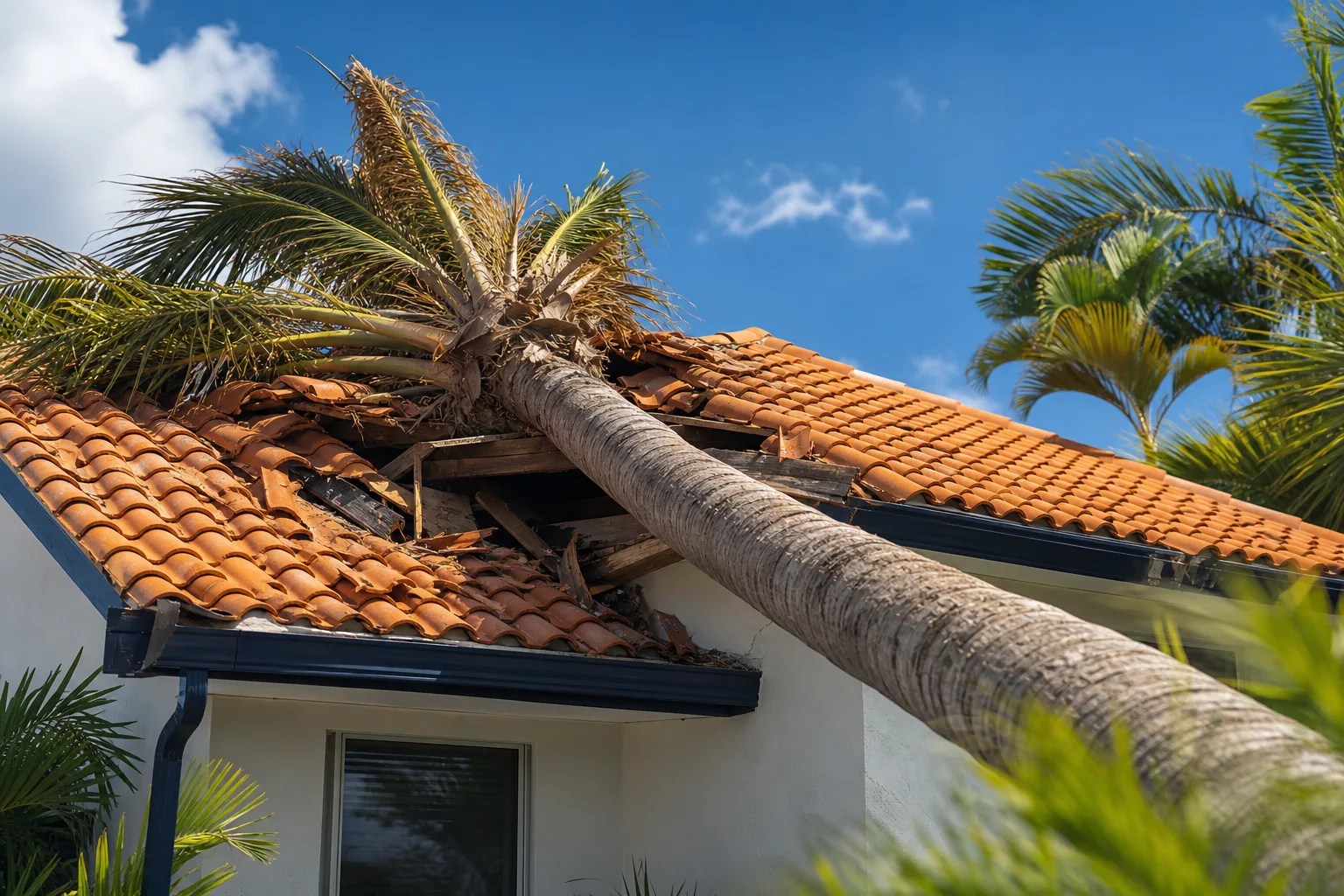
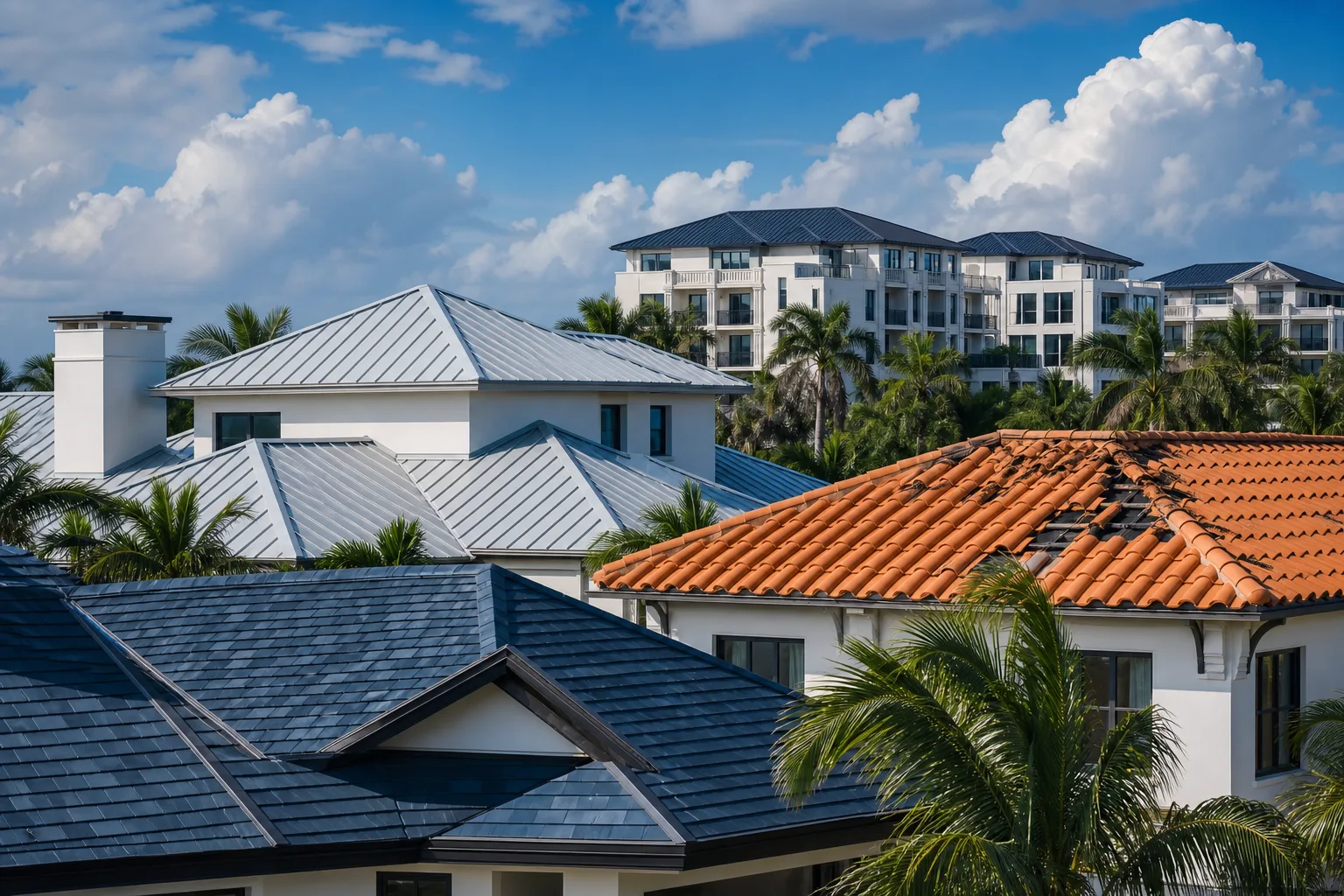
Every time a named storm or even a strong afternoon squall rolls through Palm Beach County, crews here at Millennium Makeover get a surge of calls from homeowners in Boynton Beach, Delray Beach, and Boca Raton reporting missing tiles. Sometimes it is one tile. Sometimes it is a whole field of them.
The instinct is to blame the storm. And sure, wind is involved. But when I get up on a roof after an event, what I almost always find is that the storm was the last straw, not the original cause.
Here is what is actually happening on most of those roofs.
Mortar Failure Is the Leading Culprit
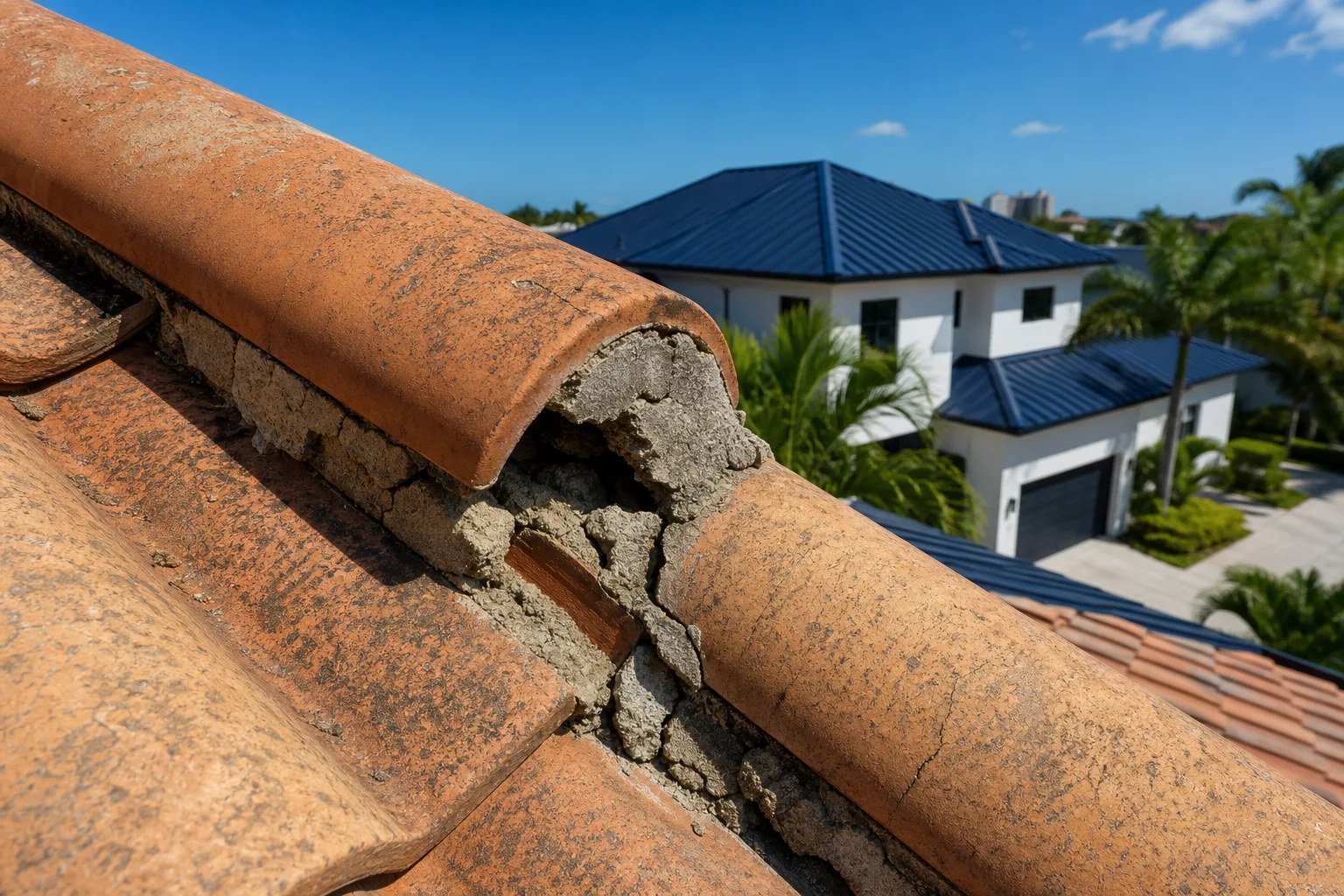
Concrete and clay tile systems in South Florida typically use mortar to bed ridge tiles, hip tiles, and sometimes field tiles at the eaves. That mortar has a service life. In our climate, with constant UV exposure, thermal cycling, and the occasional saltwater air that drifts in from the coast, mortar gets brittle. It cracks. It separates from the tile or the substrate underneath.
When it is intact, mortar holds tiles through winds that most storms throw at us. When it is cracked or hollow, a 60 mph gust is enough to pop a hip tile right off. I have seen mortar that looked fine from the ground but crumbled in my hand when I got close. That is the deceptive part of tile roofs: the surface can look great while the adhesion underneath is gone.
Corroded or Missing Fasteners
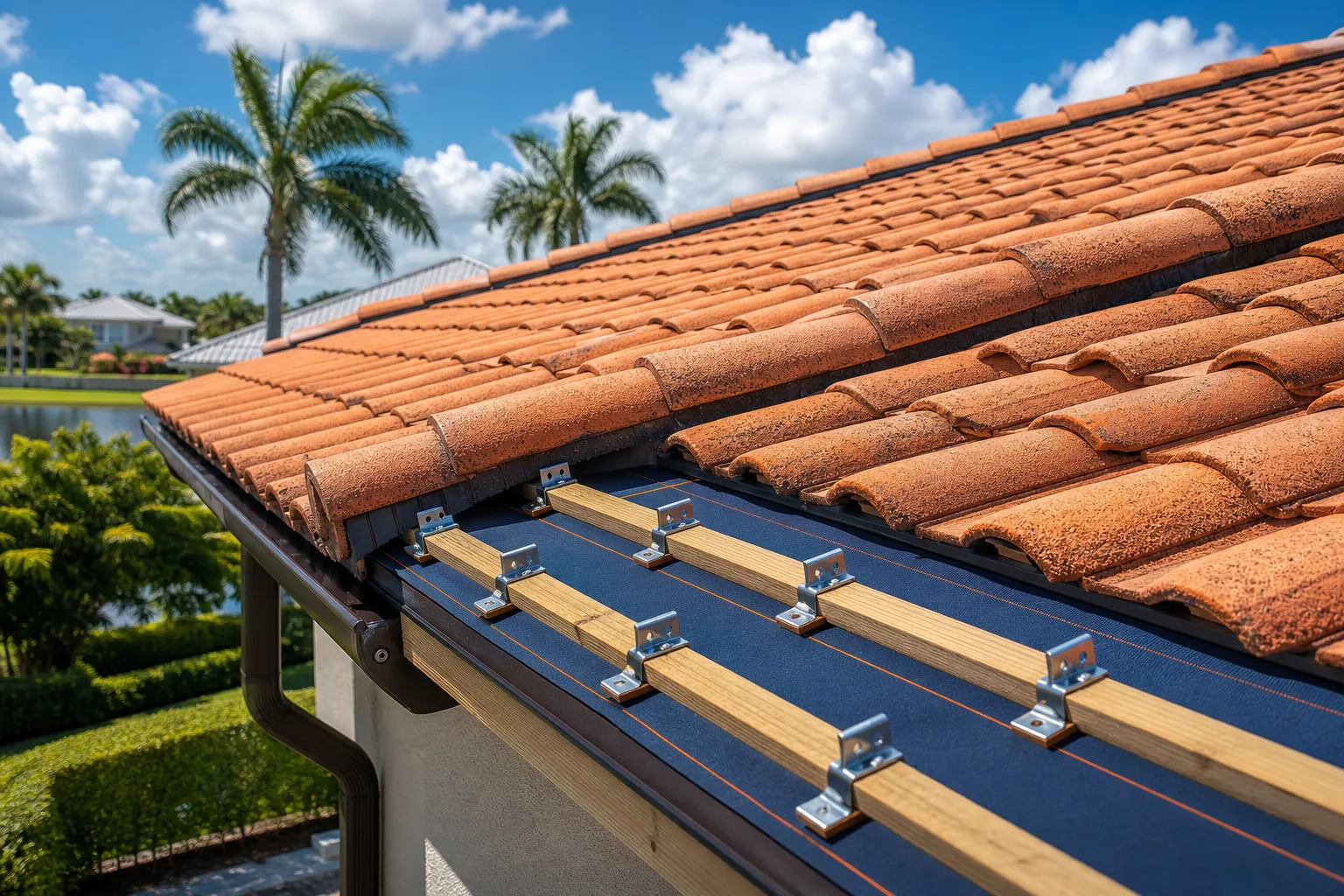
Field tiles, the ones that cover the main deck area, are typically mechanically fastened. Florida building code requires a certain fastening pattern, but older roofs installed before stricter post-Hurricane Andrew codes may have fewer fasteners than current standards require. And even properly fastened tiles can fail if the screws or nails corrode through.
In coastal areas of Delray Beach and Boca Raton especially, salt air accelerates corrosion. A fastener that looks intact from a distance can be reduced to a rust shadow by the time I pull a tile to check. Once the fastener is gone, the tile is only held by gravity and friction against the batten or deck. That is not enough when wind gets underneath the leading edge.
Underlayment and Deck Condition Beneath the Tile
Tiles are the armor layer, but the underlayment underneath is what actually keeps water out if a tile is compromised. When underlayment ages past its service life, typically 15 to 20 years for standard felt and 25 to 30 for better synthetic products, it becomes brittle and fragile. Storm winds that lift a tile, even temporarily, can tear aging underlayment in the same motion. Now you have a missing tile and a compromised water barrier at the same time.
The wood deck beneath that underlayment matters too. If there is any pre-existing moisture damage, the fasteners holding tiles lose grip. I have pulled tiles and found deck wood that looked solid but took a screwdriver like it was wet cardboard. That is not a tile problem. That is a structural problem that was hiding.
Poor Original Installation
This one is uncomfortable to say, but it is common enough that I have to mention it. Some tile roofs in South Florida were installed with shortcuts: too little mortar, wrong fastener count, field tiles that were never fastened at all in certain zones. It happens more often on roofs installed during the post-storm boom periods when demand outpaced the supply of careful contractors.
If your roof was installed during a rebuilding rush and you have never had it inspected by someone other than the installer, it may have had vulnerabilities from day one. Our storm center resource has more context on what to watch for after major weather events.
Why It Matters
Losing a tile is not just an aesthetic problem. Each missing tile is an opening for water. In South Florida, where a summer afternoon can drop two inches of rain in 45 minutes, an unprotected deck area can take on enough water to damage drywall, insulation, and framing within a single storm.
There is also a secondary issue that most homeowners do not think about: when one tile blows off, the adjacent tiles are now more exposed. Wind loads that were distributed across a full roof field now concentrate at the edges of the gap. It is a small effect but it accelerates the failure of neighboring tiles.
From an insurance standpoint, a tile that blows off in a storm is typically a covered event, but only if you can show the damage was storm-related and not pre-existing neglect. Adjusters are trained to spot old mortar failures versus fresh storm breaks. If your mortar was already cracked before the storm, you may face a dispute. Keeping your roof in documented good repair matters for that reason.
If you are not sure what your roof looks like right now, our post on how to spot hidden roof damage in South Florida walks through what to look for from the ground without getting up there yourself.
For homeowners considering whether repair makes sense versus full replacement, roof repair vs. replacement in South Florida covers how to think through that decision clearly.
Is your roof ready for hurricane season? Visit the Storm Center
What We Do Not Know Yet
A few things I cannot answer without getting on your specific roof.
First, I cannot tell you from the street whether your mortar is failing or your fasteners are corroded. Visual inspections from the ground miss the details that matter. That is not a knock on homeowners. Even experienced roofers cannot fully assess a tile roof from a ladder at the edge. You have to walk it carefully, check multiple areas, and pull sample tiles.
Second, we do not yet know how this season's storms will track or how many will make direct impacts on the Palm Beach County coastline. South Florida averages meaningful storm activity most years, but the location and intensity of any given storm determines whether a borderline roof survives or fails.
Third, if your roof is somewhere in the 15-to-25-year age range and you have not had a professional inspection recently, the honest answer is that nobody knows its true condition right now. Tile roofs are long-lived systems, but they are not maintenance-free. What happens during a professional roof inspection explains what that process actually looks like if you want to understand what you are signing up for.
I will also say this: the difference between a tile roof that survives a Category 1 event and one that loses 30 tiles is often less about the storm and more about whether someone caught the small problems before they became big ones.
What to Do About It
If you are in South Florida and your tile roof is more than 10 years old, here is what I would actually recommend.
Get a professional inspection before the season peaks. Not a sales visit where someone walks around and hands you a quote. A real inspection where someone gets on the roof, checks mortar at ridges and hips, pulls a few field tiles to check fasteners and underlayment, and gives you a written condition report. That report also becomes useful documentation for your insurer.
After any storm with sustained winds above 50 mph, get eyes on your roof. You may not see missing tiles from the ground, especially on hip roofs where a lot of the surface area slopes away from street view. A cracked tile that is still in place can let in water just as readily as a missing one.
Address small repairs promptly. A few re-bedded ridge tiles and a tube of appropriate roofing sealant at a cracked field tile is a few hundred dollars. The same roof left alone for another storm season might need sections of tile removed, deck repairs, and new underlayment, which is a different cost conversation entirely. Our tile roofing services page gives you a sense of what we handle.
Know your roof's age and history. If you bought your home and do not have documentation on when the roof was installed or last serviced, pulling the permit history from your county's building department is free and takes about 10 minutes online. It is the fastest way to establish a baseline.
Be careful about who you call after a storm. Out-of-town contractors appear in South Florida after every major weather event. Some are fine. Many are not. How to choose a roofing contractor in South Florida covers what to verify before you sign anything.
If you want to get a straightforward look at where your roof stands right now, you can start with our free instant estimate or reach out through our contact page. We have been working roofs in Palm Beach County since 2005, and we are not going anywhere after the storm passes.
Tile roofs are genuinely excellent systems for this climate. They handle heat, they resist fire, and when they are properly installed and maintained, they can outlast the house around them. But they are not bulletproof, and South Florida weather does not grade on a curve. The homes that come through storm season with their roofs intact are almost always the ones whose owners paid attention before the wind picked up.
Is your roof ready for hurricane season?
A pre-season inspection is the cheapest insurance you'll ever buy. Our Storm Center has you covered before and after the storm.
Frequently asked questions
Why do tile roofs lose tiles even in moderate storms?
Most tile loss during moderate storms is caused by pre-existing problems like cracked mortar, corroded fasteners, or aged underlayment rather than wind alone. The storm provides the final force, but the failure typically began months or years earlier. A professional inspection can identify these weak points before a storm does.
How can I tell if my tile roof mortar is failing?
From the ground it is very difficult to spot mortar failure, which is why professional inspections matter. Signs to watch for include ridge or hip tiles that look slightly shifted or lifted, visible cracks at the mortar joints along the ridge line, or tiles that rattle when wind blows across the roof. Getting a roofer on the roof to physically check bedding is the reliable method.
Does homeowner's insurance cover tiles lost in a storm?
In most cases, storm-related tile loss is a covered peril under standard Florida homeowner's policies. However, if an adjuster determines that the tiles failed due to long-term neglect or pre-existing mortar deterioration rather than the storm event itself, coverage can be disputed or reduced. Keeping your roof in documented good condition strengthens your claim position.
How often should a tile roof in South Florida be inspected?
A professional inspection every two to three years is a reasonable baseline for tile roofs in South Florida, and annually once the roof is past 15 years old. After any storm with sustained winds over 50 mph, a post-storm inspection is also a good idea even if you do not see obvious damage from the ground.
Can missing tiles be replaced individually, or does the whole roof need to come off?
Individual tile replacement is often possible, especially when the underlying deck and underlayment are in good condition. A roofer will match the tile profile and color as closely as possible and re-bed or re-fasten the replacement. If widespread underlayment failure or deck damage is found during the repair, a more extensive project may be needed.
What makes South Florida's climate especially hard on tile roof mortar?
The combination of intense UV radiation, daily thermal cycling where surfaces heat significantly in the afternoon and cool overnight, occasional saltwater air near the coast, and heavy seasonal rainfall creates an aggressive environment for mortar. Over time these factors cause mortar to lose flexibility, crack, and separate from the tile or the substrate beneath it, reducing its holding strength well before the tile itself wears out.