Boynton Beach Roof Repair: Costs, Process & What to Expect

In this article
TL;DR: Boynton Beach roof repair costs vary widely based on material, damage scope, and roof access. A thorough inspection comes first, then a line-item estimate. Knowing what drives each cost line helps you compare bids accurately and avoid paying for work you don't need.
What You Need Before You Call Anyone
Before a contractor shows up, gather a few things. You want the process to move fast and accurately.
- Your roof's age and material. Tile, shingle, or metal each have different repair methods and part costs. If you're unsure, check your permit history at Palm Beach County's building department portal.
- Photos of the damage. Take them from the ground or your attic. Don't walk a wet or damaged roof yourself.
- Your insurance declarations page. If storm damage is involved, your adjuster may need to coordinate with the contractor. Read our breakdown of storm damage roof claims and 2026 changes before that call.
- A list of recent work. If someone patched a section in the last year or two, the contractor needs to know. Old patches change the repair strategy.
Having these ready can help the estimator understand the roof and prepare a useful scope.
Step 1: The Inspection, What I Actually Look At
This is where most homeowners feel in the dark, so let me spell it out.
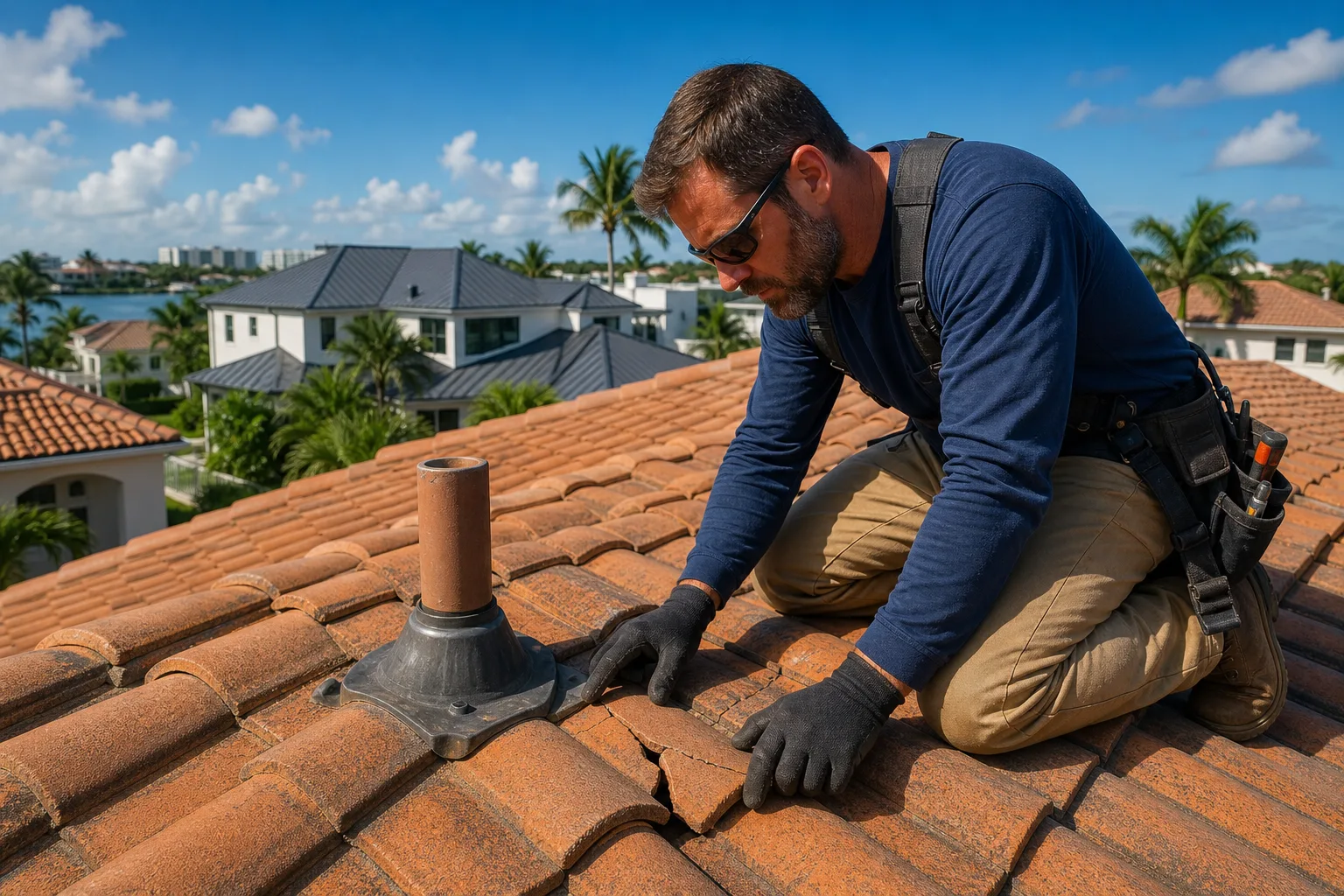
When I walk a Boynton Beach roof, I'm moving through a mental checklist that covers four zones: the field (the main surface), the perimeter, the penetrations, and the attic or decking.
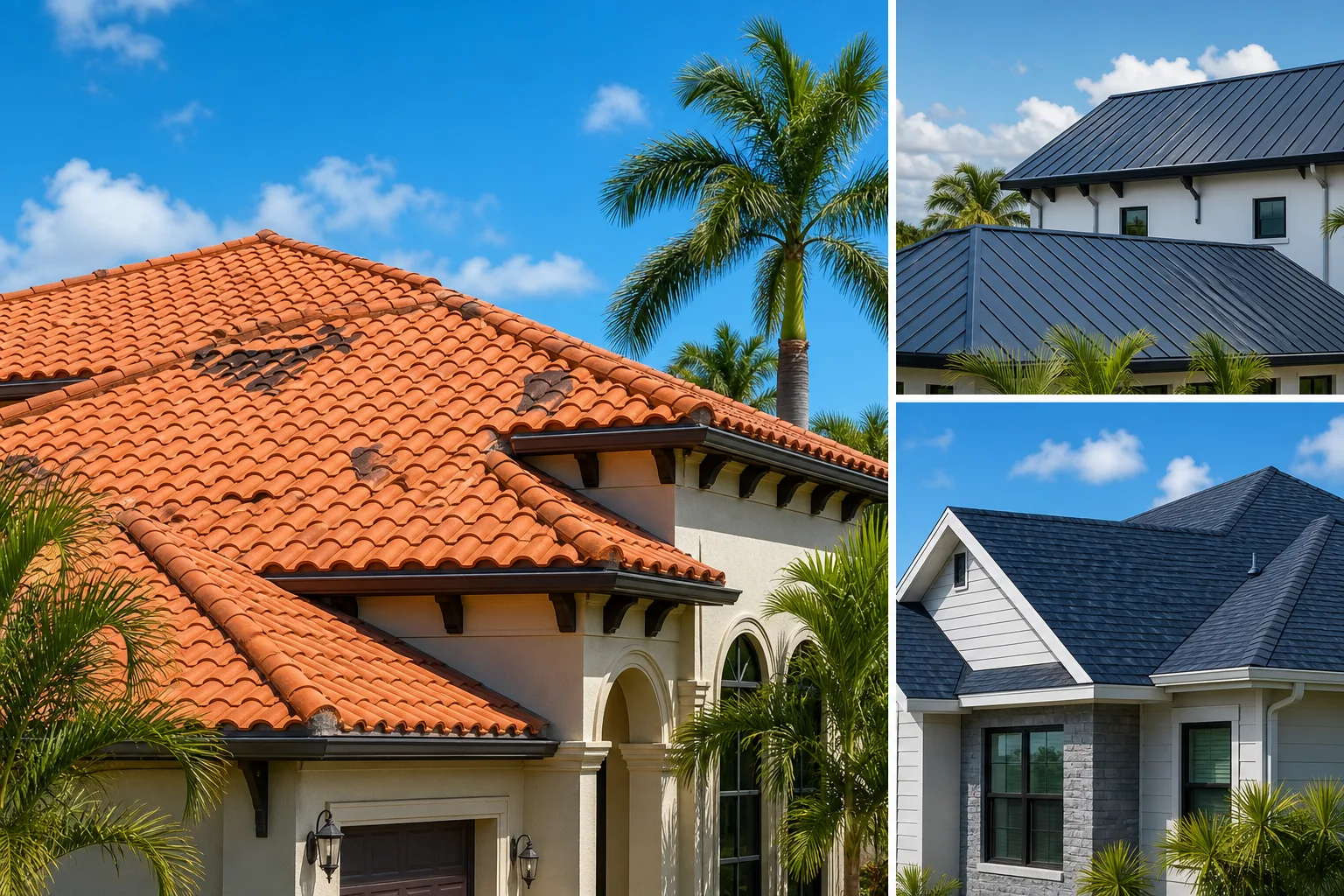
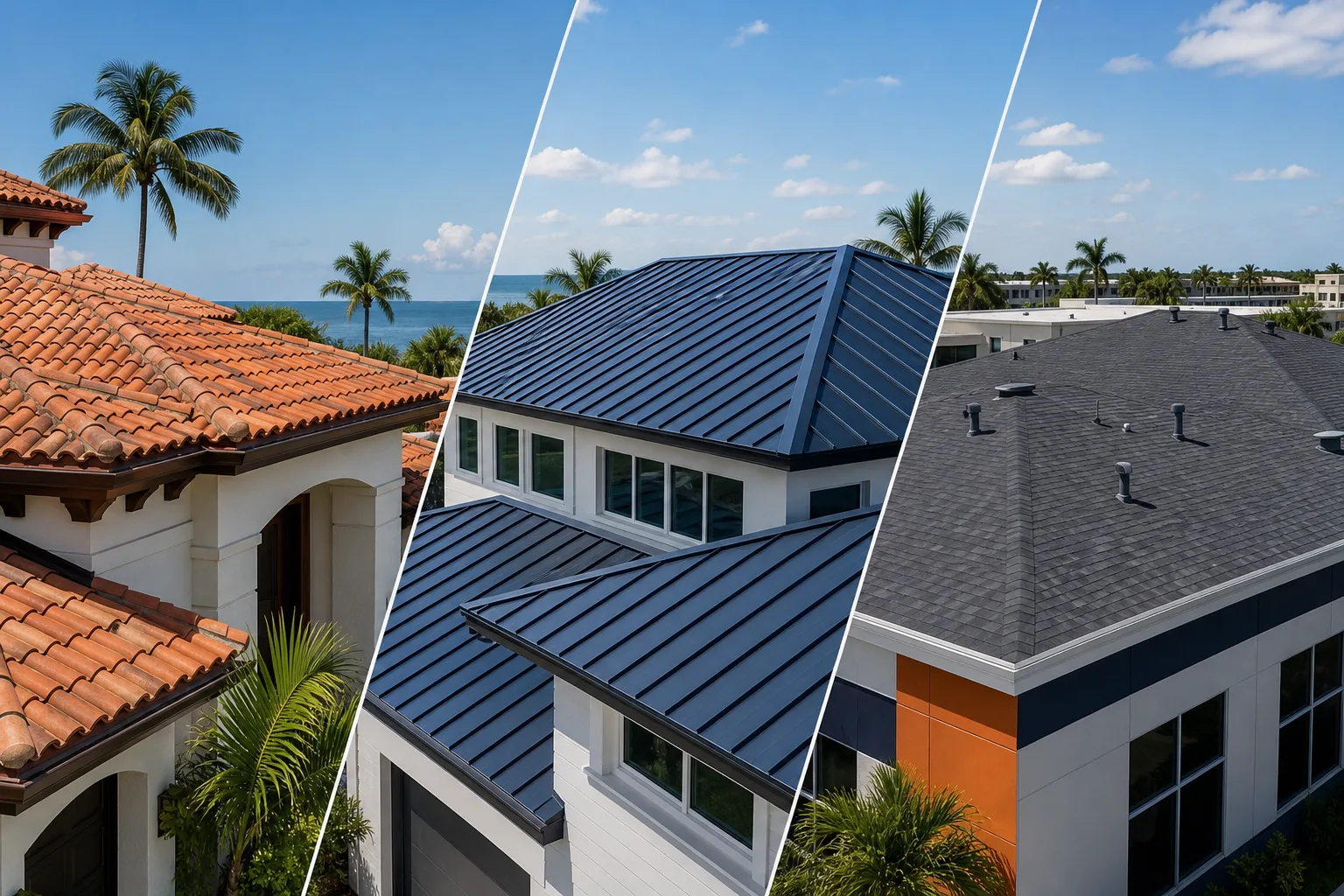
Field inspection: On a tile roof, I'm looking for cracked, slipped, or missing tiles. On shingles, I check for granule loss, curling edges, and exposed mat. On metal, I look at fastener backs and seam integrity. The field tells me whether this is spot damage or a systemic issue.
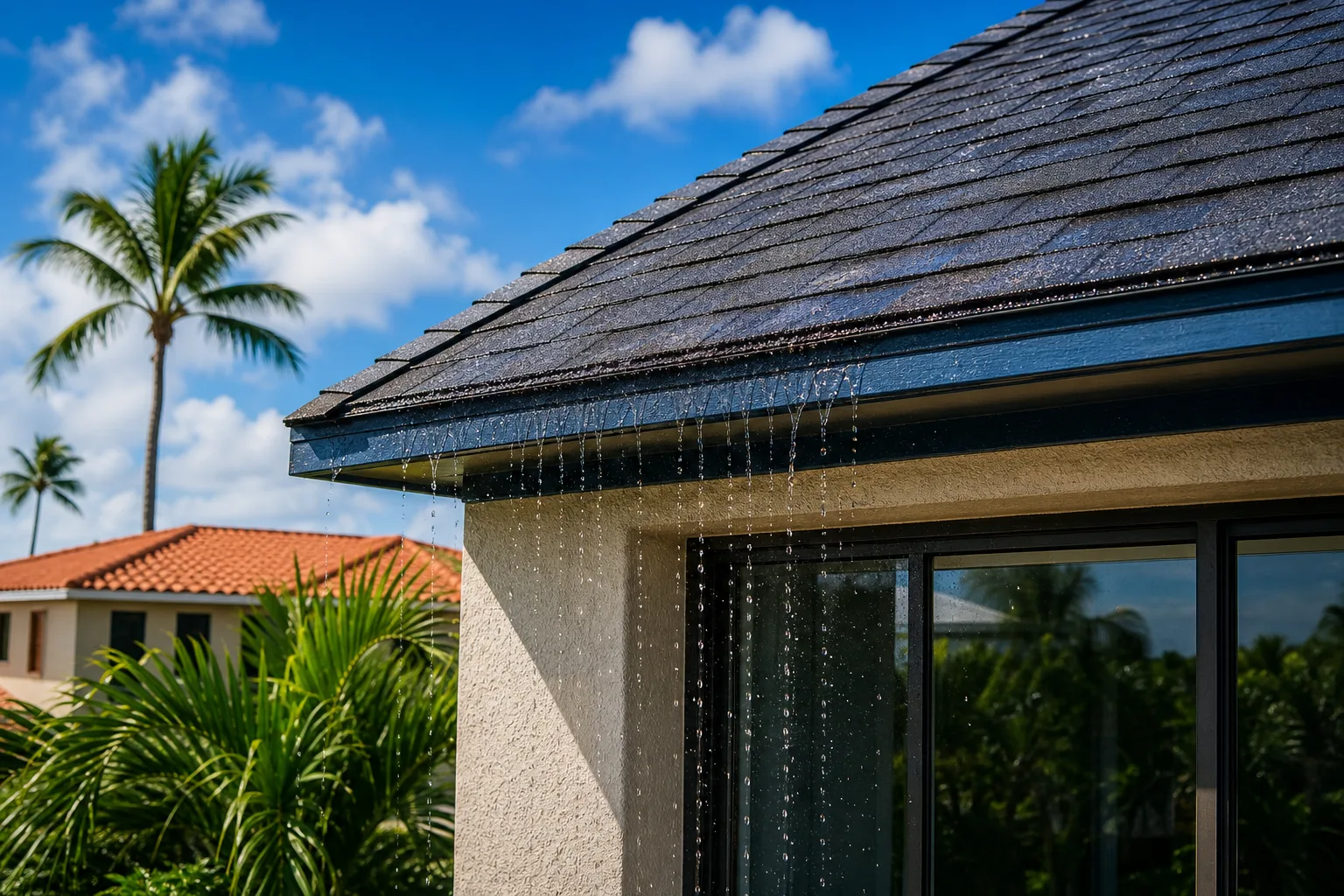
Perimeter and flashing: The edges, drip edge, valley metal, and where the roof meets any wall are the most common leak sources in South Florida. If flashing has lifted, rusted, or separated, water finds a path even if the field looks fine.
Penetrations: Every pipe boot, vent collar, and skylight curb is a potential failure point. I probe each one. Neoprene boots on plumbing vents degrade fast in South Florida UV. These are cheap to fix when caught early.
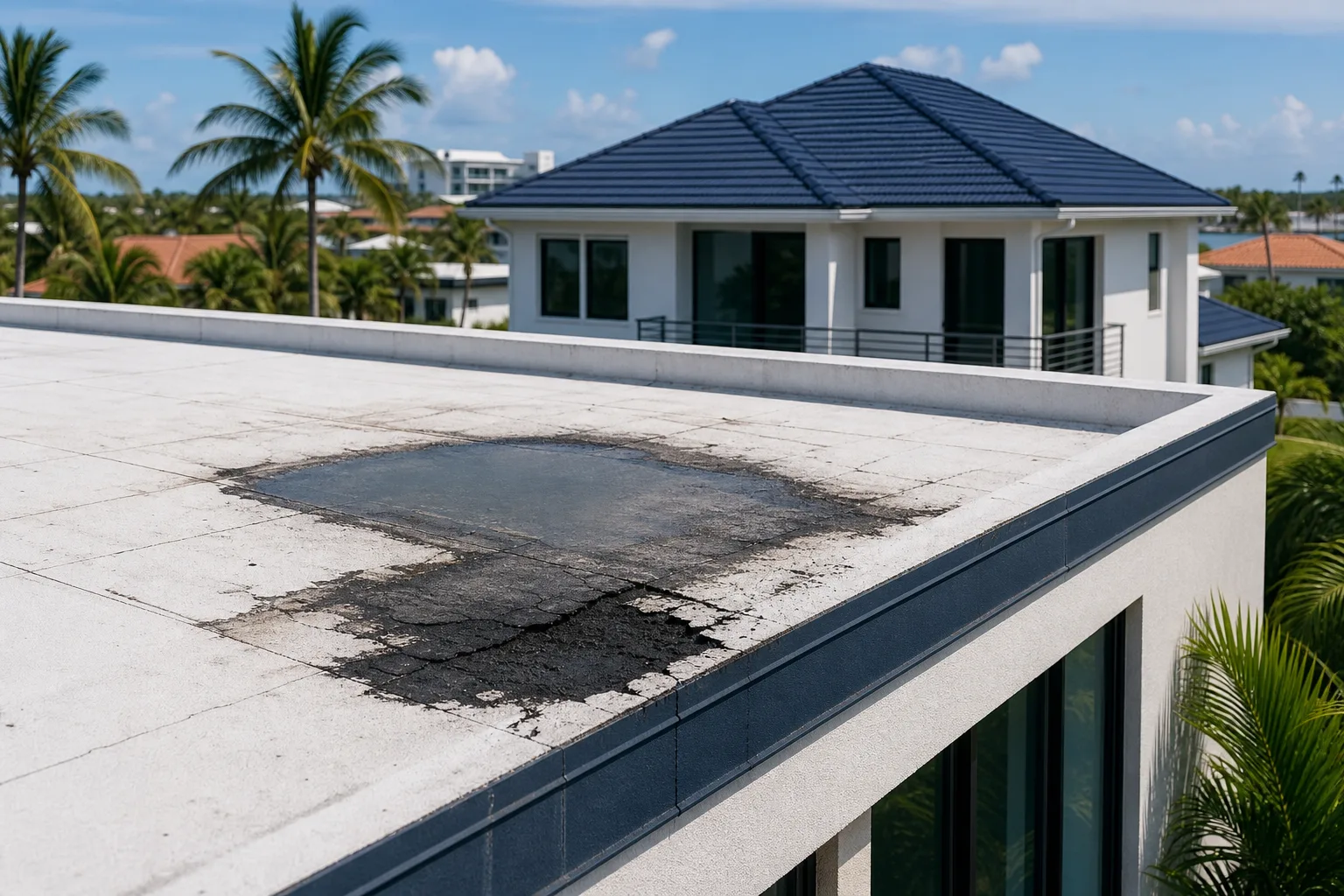
Decking and attic: If there's attic access, I go in. Staining on the decking tells me how long water has been moving. Soft spots mean possible decking replacement, which changes the repair cost significantly.
Inspection time depends on roof size, access, and complexity. If a contractor quotes you over the phone without seeing the roof, the number is a guess.
Step 2: Understanding What Drives Repair Costs in Boynton Beach
Boynton Beach sits in a wind zone that affects both building code requirements and material specs. Here is what actually moves the number on your estimate.
Material type and availability. Concrete and clay tile have to be matched carefully. Discontinued profiles mean ordering specialty tile or a closer match from a distributor, which adds cost and lead time. Shingles are easier to source locally. Metal repairs require a fabricator if custom flashing is needed. Check the roofing material price trends for South Florida for current context.
Scope of the leak vs. scope of the damage. A single leak can have multiple sources. I price for what needs to be corrected, not just what's dripping. If two penetrations are failing within six feet of each other, addressing both at once is smarter than coming back in six months.
Decking condition. Rotted or delaminated plywood adds material and labor. I call it out line by line so you can see it clearly.
Access and pitch. A steep tile roof in a townhome with a pool cage adds labor time. That's real and it shows up in cost.
Code compliance. Palm Beach County inspectors are active. Any repair that triggers a permit (generally larger scopes) has to meet current wind uplift and fastening requirements. This protects you long-term, but it adds cost vs. a contractor who skips permits entirely.
Repair prices depend on the material, access, hidden damage, and permit scope. Request a written project-specific estimate before budgeting. I won't invent exact numbers because material costs shift, but our instant estimate tool gives you a realistic range based on your inputs.
Spotted a leak or missing tiles? Schedule a repair visit
Step 3: Reading and Comparing Repair Bids
This is where homeowners get burned most often. Three bids that look different in price may actually be quoting three different scopes of work.
Here is what a solid repair bid should include:
- Specific line items. Not "labor and materials" as a single lump. You want to see: remove and replace X tiles, re-seal Y penetrations, replace Z square feet of decking if needed.
- Material specs. Brand and type of sealant, tile source and profile, underlayment type if any is being disturbed.
- Permit language. Will this be permitted? Who pulls it? Is the inspection fee included?
- Warranty terms. Workmanship warranty is what matters on a repair. Read our post on what a roofing warranty really covers before you sign.
- Contractor license. In Florida, roofing requires a licensed contractor. You can verify the license at the Florida DBPR license lookup. Our license number is CCC1326328.
If a bid is significantly lower than the others, find out what it excludes. Ask point-blank: are you pulling a permit? Are you replacing the decking you mentioned was soft? What happens if there's additional damage when you open it up?
A contractor who gets annoyed by those questions is telling you something.
Step 4: Scheduling and the Actual Repair Day
For most repairs in Boynton Beach, here is the realistic timeline once you've signed.
Permitting: Permit requirements depend on the scope and local jurisdiction; ask the building department or licensed contractor before work starts. If a permit is pulled, allow several business days to a couple of weeks for Palm Beach County approval, depending on their current queue.
Scheduling the crew: We schedule repairs by scope and material. Tile repairs need a tile crew. Metal repairs need a metal crew. Mixing up crew types costs everyone time.
Day-of process: The crew arrives, stages materials, protects landscaping and pool screens below the work area, and completes the repair. For anything permit-required, a final inspection gets scheduled separately. You shouldn't need to be home for the work itself, but someone should be reachable by phone.
Post-repair walkthrough: Ask for photos of the completed work. Any reputable contractor documents before and after. We do it as standard practice.
If your situation involves recent storm damage, the Hurricane Storm Center page covers storm response timing specifically, since emergency tarping and insurance documentation follow a different sequence than a standard repair.
Common Mistakes Homeowners Make
Waiting too long. An unresolved leak can damage decking over time. The repair cost compounds. If you see a ceiling stain, arrange an inspection promptly.
Hiring unlicensed contractors. After a storm especially, you'll see flyers and door-knockers. If they can't provide a Florida roofing license number, stop the conversation.
Accepting a verbal or vague quote. "Fix the leak for $400" is not a contract. You have no protection if the work fails or creates new problems.
Skipping the attic check. Surface repairs that don't address wet or rotting decking will fail again. Make sure whoever inspects your roof goes into the attic if there's access.
Confusing repair with replacement. Sometimes a repair is the right call. Sometimes the roof is too far gone and repair is throwing money at a replacement timeline. Our guide on signs your roof needs replacement vs. repair helps you think through that decision before you spend anything.
Bottom Line
Boynton Beach roof repair doesn't have to be a black box. A thorough inspection, a line-item estimate, and a licensed contractor who answers your questions directly, that's the whole formula.
If you want to know where your roof stands, start with our roof repairs page or use the instant estimate tool to get a realistic range before anyone sets foot on your property. Either way, you'll have enough information to make a confident decision.
Spotted a leak or missing tiles?
Small problems get expensive fast in the Florida sun. Get it looked at by a local crew before the next storm.
Frequently asked questions
How much does roof repair cost in Boynton Beach?
Costs vary depending on material, damage scope, and whether decking replacement is needed. Repair prices vary with material, access, hidden damage, and permit scope; request a written estimate for your roof. The best way to get an accurate number is a proper inspection, not a phone quote.
Does a roof repair in Boynton Beach require a permit?
Not always. Permit requirements depend on the actual work and jurisdiction. Ask the local building department or licensed contractor before starting. A licensed contractor will tell you upfront whether your specific repair triggers a permit requirement.
How do I know if my roof needs repair or full replacement?
Age, material condition, and the extent of damage all factor in. If the damage is isolated and the rest of the roof is structurally sound, repair usually makes sense. If the deck is widely compromised or the system is near end of life, replacement is often more cost-effective long-term. Our blog post on signs your roof needs replacement covers this in detail.
How long does a roof repair take in Boynton Beach?
Repair duration depends on scope, materials, weather, and inspection requirements. Permit timing and emergency tarping availability vary with the jurisdiction, contractor workload, and storm conditions. Ask the roofer for a project-specific schedule.
What should I look for in a Boynton Beach roofing contractor?
Verify their Florida roofing contractor license through the DBPR website before signing anything. Look for a line-item written estimate, clear permit language, and a workmanship warranty in writing. A contractor who answers inspection and scope questions without rushing you is usually a good sign.
Can I file an insurance claim for roof repairs in Boynton Beach?
If storm damage may be covered, you can report a claim to your insurer and ask how your policy applies. Florida's claim rules have changed recently, so understanding your policy's timeline requirements matters. It helps to have a licensed contractor document the damage before you contact your adjuster.