5 Roof Repairs Boynton Beach Homeowners May Encounter

In this article
TL;DR: Five roof repairs Boynton Beach homeowners may encounter are cracked or slipped tiles, failed flashing, shingle blow-offs, clogged or leaking gutters, and soffit and fascia rot. Knowing what drives each repair helps you spot a legitimate bid versus a padded one. Most of these are fixable without a full replacement if you catch them early.
Roof repair needs in Boynton Beach vary by roof type, age, and storm exposure. The climate here is genuinely hard on roofing systems. You get intense UV all year, afternoon thunderstorms that drop several inches in an hour, salt air blowing in from the coast, and then a hurricane season that can drive rain sideways in strong winds. These are common types of issues on South Florida roofs, and understanding them will help you have a smarter conversation with any contractor, including us.
If you want a detailed breakdown of what repair work costs locally, the companion post on Boynton Beach roof repair costs, process, and what to expect covers the pricing side in depth. This article focuses on what the repairs actually are and how a good contractor addresses them.
1. Cracked, Broken, or Slipped Tile
Boynton Beach has a lot of tile roofs, concrete and clay both. Tile is durable, but it is not indestructible. The three failure modes I see most often are: cracked tiles from impact (falling branches, hail, someone walking on the roof without knowing where to step), broken tiles from foot traffic during an AC or solar installation, and slipped tiles where the mortar or fastening system has deteriorated.
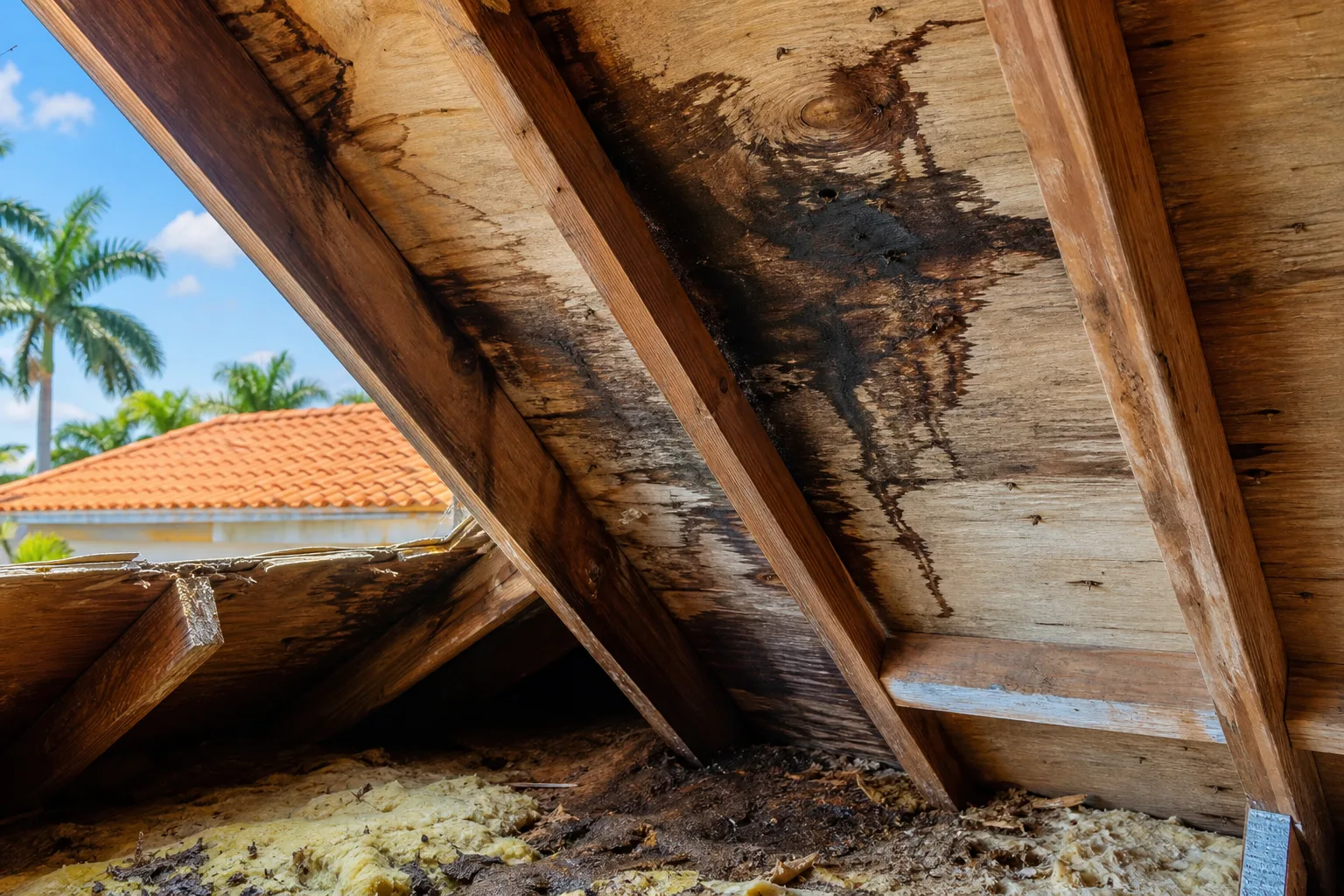
A cracked or missing tile is a problem mostly because it exposes the underlayment underneath. In South Florida, underlayment degrades from UV exposure over time. If the tile above it disappears, that timeline shortens dramatically. Once the underlayment fails, water gets into the deck.
What a proper fix looks like: The contractor removes the damaged tile, inspects the underlayment beneath it, replaces the tile with a matching piece (color and profile matching matters, especially on older roofs), and resets any mortar at the hip or ridge if that is where the failure is. If multiple tiles are slipped in a field section, that often points to a fastener or underlayment issue across a broader area, and you want that documented before signing off.
For everything you need to know about tile roofing systems in South Florida, the tile roofs page is a good starting point.
2. Failed or Improperly Installed Flashing
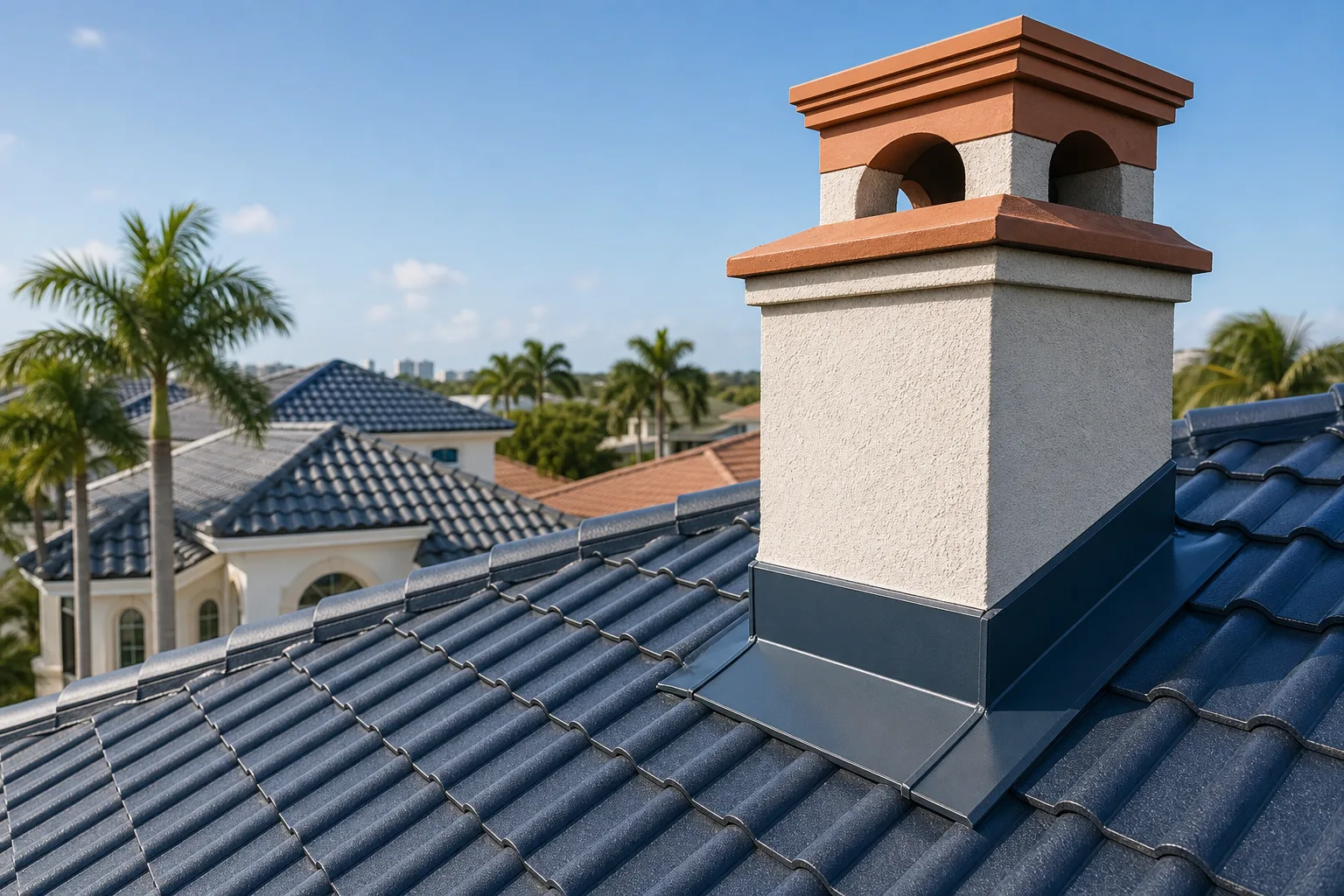
Flashing is the metal (usually galvanized steel or aluminum) that seals roof transitions: where the roof meets a wall, around chimneys, at skylights, along valleys, and at pipe penetrations. It is the most leak-prone part of any roof system and, frankly, the area where I see the most shoddy workmanship on homes that were repaired by someone cutting corners.
In South Florida, flashing fails for a few reasons. Thermal expansion from the heat cycle causes metal to move, and if it was not installed with that movement in mind, the sealant cracks. Older homes sometimes have original flashing that was never replaced when shingles or tiles were. And some contractors simply do not flash pipe boots or step flashing correctly the first time.
What a proper fix looks like: The old flashing comes off. The deck underneath gets inspected for any rot or delamination. New flashing goes in with the correct overlap and fastening, and a compatible sealant is applied. If a roofer is proposing to just caulk over existing flashing without pulling it, ask why. Sometimes that is the right call on a very fresh installation, but a sealant-only repair may not resolve the underlying defect.
Flashing issues are one of the things I always look for during an inspection. If you want to understand the full inspection process, the post on what happens during a professional roof inspection walks through exactly what I check.
3. Wind-Driven Shingle Blow-Offs and Lifting
Shingle roofs in Boynton Beach face a specific challenge: the wind speed requirements under Florida Building Code are high, and older shingles often were not installed to those standards. Even newer shingles can lift if the nailing pattern is off or if they were installed during a cold snap when the adhesive strip did not seat properly.
When shingles lift or blow off, the self-sealing strip loses its bond. Once that happens, wind can get under adjacent shingles during the next storm and peel them back progressively. A few missing shingles can become a section if it is not addressed before the next weather event.
What a proper fix looks like: The affected shingles come off down to the deck. If there is any soft wood, it gets replaced. New shingles go in with the manufacturer-specified nail pattern (the nail pattern required by the product approval and applicable Florida Building Code). The contractor should be matching the existing shingle as closely as possible. An exact match is not always available, especially on older roofs, but the profile and weight class should be consistent.
If the blow-offs are widespread or if the shingles are already aging, it is worth having a conversation about whether repair or replacement makes more sense. The post on signs your roof needs replacement, not just repair can help you think through that decision before you talk to a contractor.
For general information on shingle roofing systems, the shingle roofs page covers what we install and why.
Spotted a leak or missing tiles? Schedule a repair visit
4. Clogged or Pulling Gutters
Gutters do not get enough credit until they fail. In Boynton Beach, the main issues I see are: gutters clogged with debris from oak, palm, and ficus trees; gutters pulling away from the fascia because the fasteners have worked loose or the wood behind them has rotted; and seams separating on sectional gutters.
When gutters cannot drain, water backs up at the eave. In a heavy rain, that water finds its way under the starter course of shingles or tiles, into the fascia, and eventually into the soffit. Once the soffit and fascia are wet repeatedly, rot sets in and you have a bigger repair.
What a proper fix looks like: Cleaning is the easy part. If the gutters are pulling away, the contractor needs to assess whether the fascia behind them is solid. Rotted fascia needs to be replaced before new hangers go in, otherwise the repair fails again inside a year. If multiple gutter seams are failing, compare repair and replacement costs.
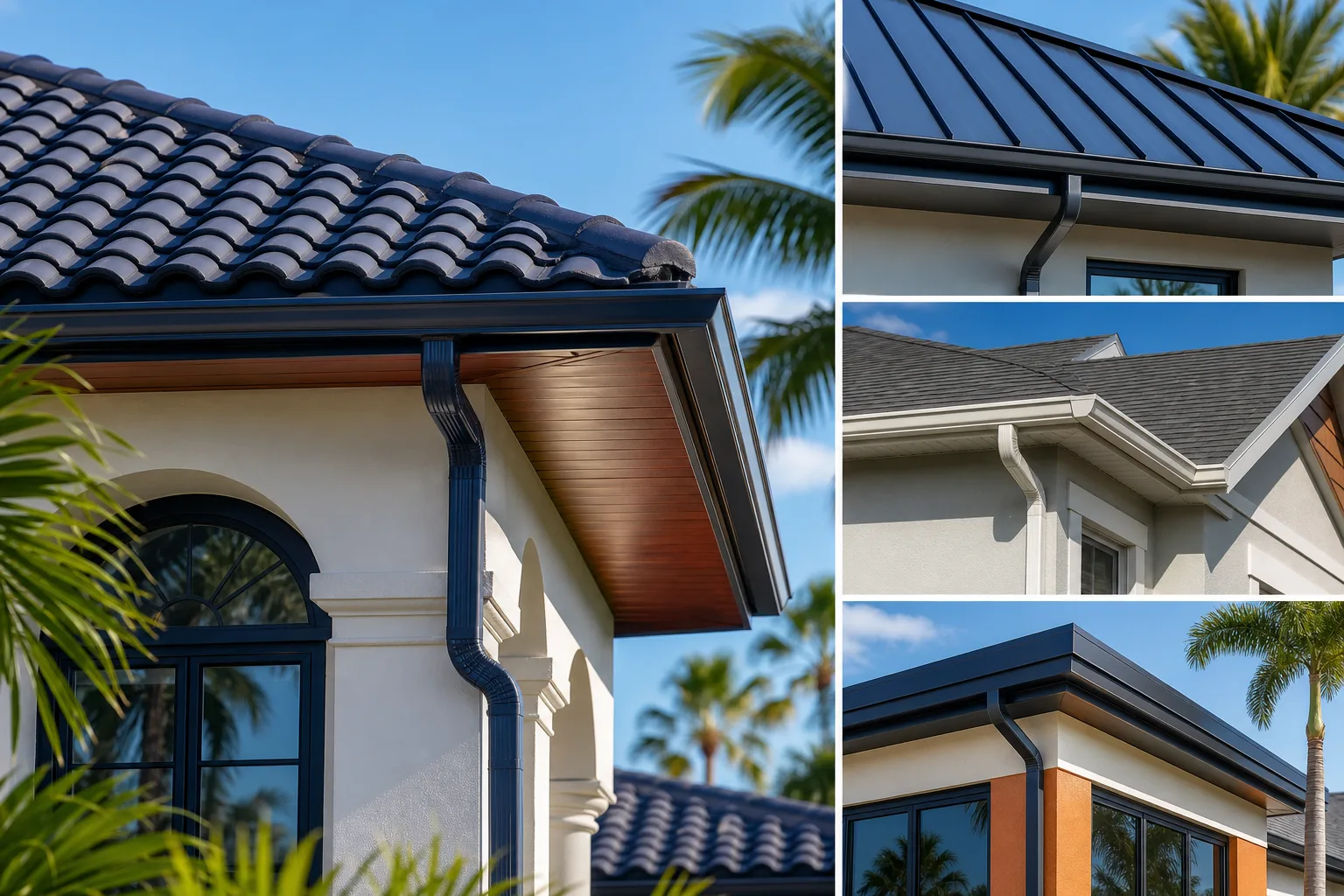
We cover gutters as part of the roofing system, not as an afterthought. The gutters page explains the options and what we typically recommend for South Florida homes.
5. Soffit and Fascia Rot
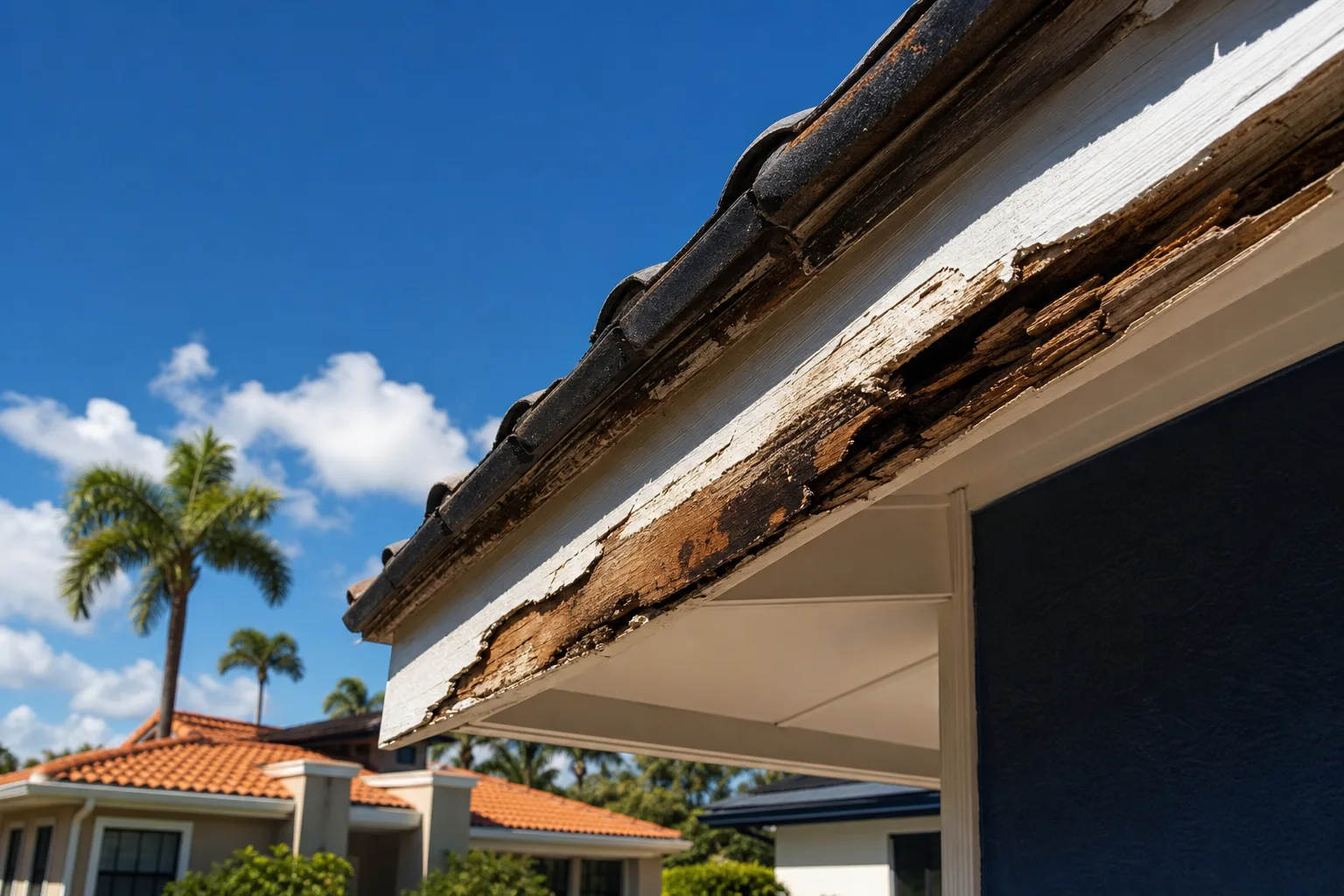
This one follows from almost everything above. Soffit and fascia are the trim components at the roof's edge and overhangs. They are often made from wood or wood composite, and in South Florida's humidity, they are vulnerable. Once they start rotting, the problem compounds: rotted fascia lets water into the structural rafter tails, and rotted soffit can become an entry point for pests.
I see this most on homes where gutters have been overflowing for a season or two, where roof flashing has been allowing water to run behind the drip edge, or where the soffit vents have been painted over and trapped moisture inside the overhang.
What a proper fix looks like: The rotted material comes out. The rafter tails get inspected. If they are sound, new fascia and soffit go in. If any rafter tail ends are compromised, they need to be sistered or replaced before the new trim is installed. The finish should match the existing profile and be primed on all six sides before installation to slow future moisture uptake.
This is one of those repairs where a thorough contractor will open it up fully before quoting, because you cannot give an accurate number until you see what is underneath. Be cautious of any bid that does not include a look at the structural condition before committing to a price.
A Note on Storm-Related Repairs
All five of these repairs can be triggered or accelerated by storm events, and Boynton Beach is squarely in South Florida's hurricane zone. If a named storm has recently come through your area and you are seeing any of these issues, the damage documentation process matters. The Hurricane Storm Center has information on how we handle storm response and what to keep in mind when navigating a claim.
The 2026 storm damage roof claims post is also worth reading if you are thinking about filing with your insurer, as the rules around claims have shifted in ways that affect South Florida homeowners directly.
Bottom Line
Boynton Beach roof repair is not one thing. It is a category that covers tile work, flashing, shingles, gutters, and trim, and each of those has its own correct process. The repairs above are examples of issues homeowners may encounter locally.
A few things I always tell homeowners before they sign anything: get the scope in writing before the work starts, make sure the contractor is pulling a permit where required, and ask what they find when they open it up. A contractor who cannot explain what they found and why the repair addresses it is a contractor worth being cautious about.
If you want a set of eyes on your roof with no pressure and no guessing, you can request a quote or use the free instant estimate tool to start the conversation. We have been doing this in Boynton Beach since 2005, and we are happy to walk you through exactly what we find.
Spotted a leak or missing tiles?
Small problems get expensive fast in the Florida sun. Get it looked at by a local crew before the next storm.
Frequently asked questions
How do I know if a cracked tile is causing a leak inside my home?
A single cracked tile does not always mean an immediate interior leak, because the underlayment beneath it provides a second line of defense. However, if the underlayment is older or already compromised, water can get through quickly. I recommend having it looked at as soon as you notice it rather than waiting for staining to appear on your ceiling.
Can I just caulk over failing flashing instead of replacing it?
Caulk over old flashing is a temporary measure at best, and in South Florida's heat it often fails within a season or two. If the flashing has already failed once, the right fix is to remove it, inspect the deck underneath, and install new flashing with proper overlap and fastening. We see a lot of repeat leaks in the same spot because someone caulked instead of re-flashing.
Do I need a permit for a roof repair in Boynton Beach?
It depends on the scope. Permit requirements depend on the work and jurisdiction; check with the local building department before starting. A licensed contractor should know the current threshold and advise you accordingly before starting work.
How much does a typical roof repair in Boynton Beach cost?
Repair costs vary significantly depending on the type of damage, roofing material, and how much of the underlying structure is affected. Costs depend on material, access, and hidden damage; get a project-specific written estimate. The companion post on Boynton Beach roof repair costs breaks down the ranges in more detail.
My gutters are pulling away from the fascia. Is that a roofing problem or a gutter problem?
It is usually both. Gutters pull away because either the hangers have failed or the fascia board behind them has rotted and can no longer hold fasteners. If you just re-hang the gutters without addressing the fascia, the repair may fail again. A roofer who handles gutters should assess fascia condition before reattaching anything.
How often should I have my Boynton Beach roof inspected to catch these issues early?
For most South Florida homes, an annual inspection is a reasonable baseline, with an additional check after any significant storm event. Tile roofs and older shingle roofs benefit from more frequent attention because small issues can escalate quickly in the local climate. Catching a slipped tile or a failing boot seal early is almost always cheaper than dealing with deck damage later.